
 Product Search


Induction Hardened vs. QPQ Piston Rods: Which Lasts Longer in High-Cycle Industrial Dampers?
 Nov 04, 2026|
 View:9
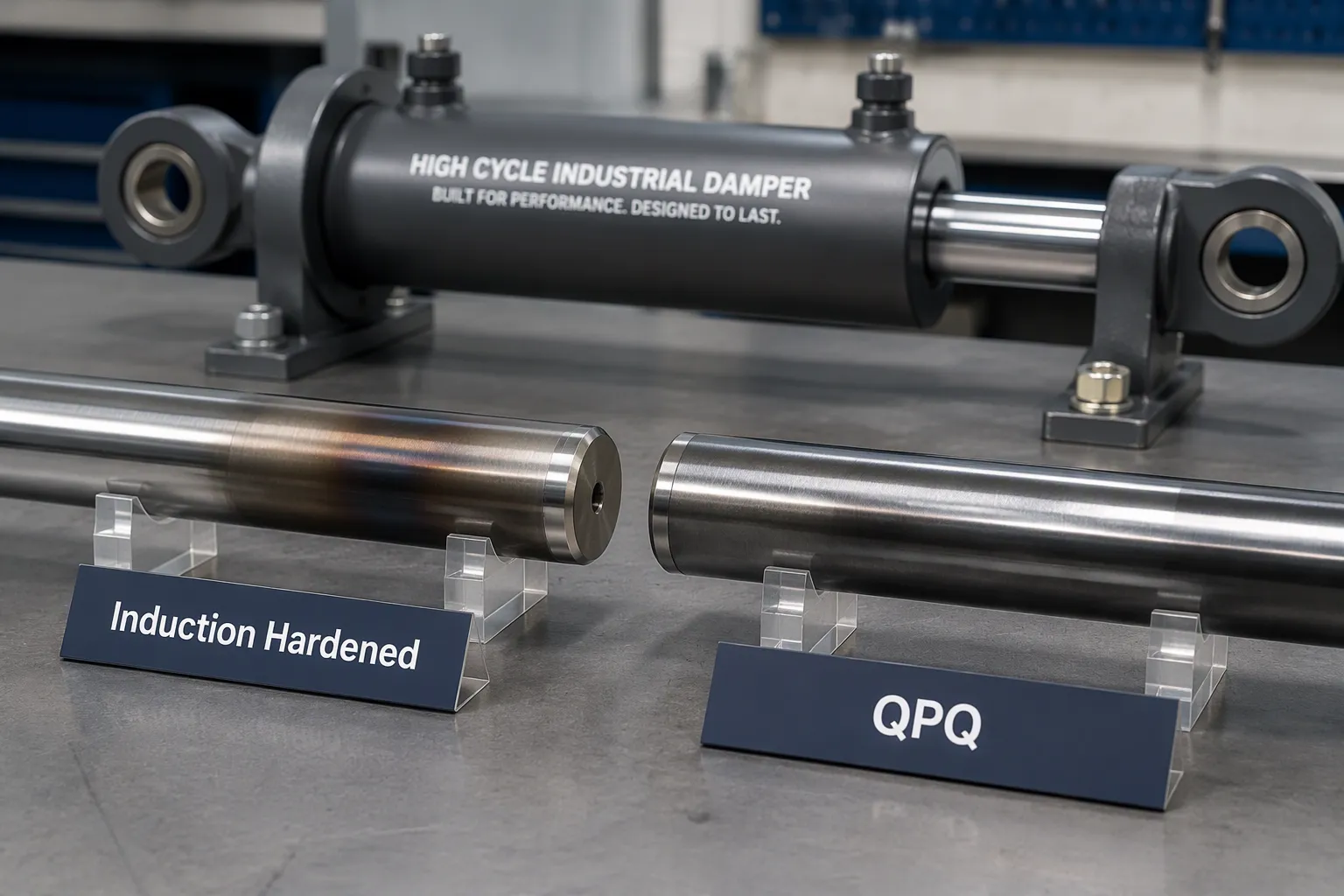
Induction hardened piston rods usually last longer in harsh, high-load, abrasive high-cycle damper uses. QPQ rods give strong rust resistance and smooth running, so they work well in corrosive or moderate-load high-cycle service. This comparison looks at durability and hardness, fatigue resistance, wear and corrosion resistance, cost, and machinability.
There is no single answer to which lasts longer for every damper. Load profile, operating environment, and budget decide the best match. Some dampers run over 500,000 cycles in sealed, oil-filled housings, per Nimbr, while others face salt air and temperature swings. The sections below show where each treatment fits best.
Key Takeaways
Induction hardened rods last longer in damper jobs that are tough, high-load, and abrasive.
QPQ rods resist rust well and run smoothly in corrosive or moderate-load service.
Induction hardening makes the surface harder (HRC 50–60) and the hardened layer deeper (1.5–6 mm).
QPQ treatment gives good protection against rust and a very smooth finish (Ra ≤ 0.2μm).
Pick the rod treatment based on the damper's load, environment, and budget.
Induction Hardened Rods Defined
The Induction Hardening Process
Induction hardening uses electromagnetic heat on the rod surface, then quenches it. A high-frequency alternating current runs through a coil and makes a magnetic field. The rod surface heats up fast as it moves through that field, as SD Steel explains. Then water or another cooling medium quenches the surface. The result is a hard outer case over a tough, flexible core.
The treatment happens at a set point in the production line. Manufacturers do induction hardening after deep-hole drilling but before chrome plating. Straightening happens between these steps, so the rod stays true before the final surface layer goes on. Induction hardening often pairs with chrome plating. The hardened subsurface carries the load, and the chrome layer seals the surface against the sealing contact.
Key Properties
The process makes a hard case with a controlled depth. Published figures vary by supplier and rod diameter, and the table below collects typical values.
Source | Surface Hardness | Case Depth |
|---|---|---|
Komatsu | HRC 52–56 | — |
NIPPON STEEL | HRC 50–58 | 2–5 mm |
General induction-hardened rods | 50–60 HRC | 2–6 mm |
ISO Hydraulic reports a typical case depth of 1.5–3.0 mm depending on diameter. Skyline Pipes lists a surface hardness of HRC 50 minimum and a minimum case depth at 1 mm.
This hard case protects the rod from scratches and dents during high-cycle operation. The soft core absorbs shocks and vibrations without permanent deformation, according to SD Steel. The outer layer also resists micro-cracks that show up in untreated or evenly hardened bars. Together, the two zones give the rod surface protection and internal resilience at the same time.
QPQ Rods Defined
The QPQ Treatment Process
Quench-Polish-Quench is a salt-bath nitriding and post-oxidation treatment. It builds a hard, rust-resistant compound zone on the rod surface. The process has three stages, according to Wikipedia:
A standard salt-bath nitrocarburizing cycle makes a layer of epsilon iron nitride.
The rod then gets mechanical polishing, like vibratory finishing, lapping, or centerless grinding.
The rod goes back into the salt quench bath for 20 to 30 minutes, then gets a rinse and an oil dip.
That last dip creates an iron oxide layer about 3 to 4 micrometers thick. This layer boosts rust resistance and gives the rod a black finish. Finishing.com describes the same sequence as SBN/SBQ/polish/SBQ. A typical line also includes cleaning, preheating, and drying and oiling steps around the core nitriding stage.
Key Properties
QPQ treatment gives a hardness of HRC 40–45. The compound zone resists wear at the sealing contact while the diffusion zone below supports the case. Salt spray resistance passes 120 hours, so the rod holds up in humid or mildly corrosive settings. Surface roughness stays at Ra ≤ 0.2μm, which keeps friction low and rod movement smooth through every cycle.
Base material choice shapes the final result. HZX makes QPQ piston rods from C45 and C35 carbon steel, plus 304, 316, and 316L stainless steel. Carbon steel grades offer a strong core at a practical cost. Stainless grades add their own rust resistance to the treated surface. The treatment works on solid and hollow rods alike, with diameters from 6mm to 30mm and a maximum length of 1000mm.
Common Applications
Where Induction Hardened Rods Fit
Induction hardened rods work well in dampers that carry heavy loads and face rough, scratchy conditions. Machines used in engineering, hydraulic and pneumatic systems, and car suspension parts all use this type of rod, according to NBMaxAuto. These places hit the rod surface with grit, sudden shocks, and nonstop cycling. The hard outer case resists scratches while the tough core takes the impact.
Industrial sliding doors and gate dampers also gain from this treatment. A hardened rod keeps its surface through thousands of open-and-close cycles. Chrome plating often covers the hardened case, so the rod gets both inner strength and a sealed outer layer. Plants that run equipment all day and night choose this combo for its long service life.
Where QPQ Rods Fit
QPQ rods handle a wide range of damper and gas spring jobs. Colegasspring reports that QPQ treated rods with top seals work well from -40°C to +80°C, and its heavy-duty sliding door dampers offer 50N to 2000N of pulling force. That range covers both light furniture hardware and heavy industrial doors. Common uses include:
Car trunk, hood, and tailgate gas springs
Furniture cabinet supports and office chairs
Medical beds and bicycle dampers
Hardware toolboxes and engineering vehicles
HZX lists automotive, aerospace, and manufacturing fields as the main users of QPQ solid shafts, with axles, shafts, and steel piston rods as typical parts. NBMaxAuto adds packaging, printing, textile, and transportation machinery to the list. The smooth Ra ≤ 0.2μm finish keeps friction low in these high-cycle jobs. The 120-hour salt spray result also helps in outdoor and humid places, where rust would make rods last a shorter time.
Durability and Hardness
Surface Hardness and Case Depth
Hardness is the first line of defense on any damper rod. Induction hardening gives a surface hardness of HRC 50–60 in published sources. Case depth runs from about 1.5 mm to 6 mm, depending on rod diameter and supplier specs. QPQ treatment reaches HRC 40–45, and its hardened zone is much thinner. It is built from a compound layer of a few micrometers over a supporting diffusion zone.
Treatment | Surface Hardness | Hardened Zone |
|---|---|---|
Induction hardened | HRC 50–60 | Case depth roughly 1.5–6 mm |
QPQ | HRC 40–45 | Compound layer of a few micrometers plus diffusion zone |
The deeper case gives induction hardened rods more reserve material to lose before the sealing surface fails. A rod that wears through a thin compound layer exposes softer metal underneath. A rod with a multi-millimeter case keeps hardness in reserve through many more cycles.
Resistance to Indentation and Galling
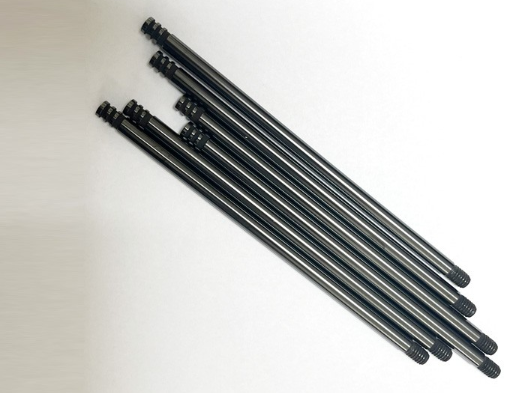
High-cycle dampers press the rod against seals and guides thousands of times per shift. Hardened surfaces resist the small dents and scratches that grit and shock loads leave behind. The tough core under an induction hardened case absorbs impact without permanent deformation. So the rod recovers its shape after sudden loads.
Galling is a related risk. It happens when two metal surfaces rub and tear at each other under pressure. A harder surface lowers that risk at the seal contact. Induction hardened rods carry a clear hardness advantage here, and their chrome plating adds a smooth outer layer over the hard case. QPQ rods counter galling a different way. Their low surface roughness of Ra ≤ 0.2μm cuts friction at the sliding contact. This reduces the heat and drag that drive surface damage. Both treatments protect the rod, and each does it through a different mechanism.
Fatigue Resistance
Effect on Fatigue Life
Fatigue cracks usually begin at the surface. A damper rod bends a little with every cycle, and the outer skin takes the most stress. Small scratches, dents, and machining marks give those cracks a spot to start. Induction hardening makes that outer skin stronger. The hard case resists the tiny cracks that appear in untreated or evenly hardened bars, as SD Steel notes. The tough core below takes in shock and vibration without permanent deformation. This two-zone structure slows crack starting and keeps the rod straight through long service.
QPQ rods handle fatigue life in a different way. The salt-bath process forms a compound zone over a diffusion zone, and the diffusion zone supports the thin hard layer. A smooth surface at Ra ≤ 0.2μm removes many of the stress raisers that trigger cracks. The treatment also leaves the rod core mostly unchanged, so the base metal keeps its own toughness. Both treatments extend fatigue life, and each works through a different mechanism.
Behavior Under Repeated Loads
Repeated loading tests the bond between the hardened zone and the core. An induction hardened case several millimeters deep shares load with the core across a wide transition. The rod recovers its shape after sudden loads, and the surface stays hard through many cycles. Chrome plating over the case adds a smooth sealing layer without carrying the bending load.
QPQ rods do well under moderate repeated loads. The compound layer is thin, so the diffusion zone does most of the support work. The low-friction finish cuts drag and heat at the seal contact, and that heat is a common cause of surface damage in high-cycle dampers. For corrosive or moderate-load duty, this combination holds up well. For severe shock loads, the deeper induction hardened case keeps more hardness in reserve.
Wear and Corrosion Resistance
Wear in Dynamic Sealing Contacts
Each damper cycle pulls the seal across the rod surface. Grit, heat, and pressure all push against that contact. Induction-hardened rods show better wear resistance in high-cycle uses than traditional chrome-plated rods. The hard case handles the scraping action much better than a plain chrome layer over soft steel. A rod that resists surface loss keeps its seal tight for more cycles.
Heat changes things, though. Nitrided rods keep their surface quality longer than traditional induction-hardened chrome rods in very hot conditions. The compound zone holds its structure when temperatures rise, so the sealing contact stays smooth. Buyers who run dampers in hot engine bays or near furnaces should think about this point carefully.
Corrosion Protection
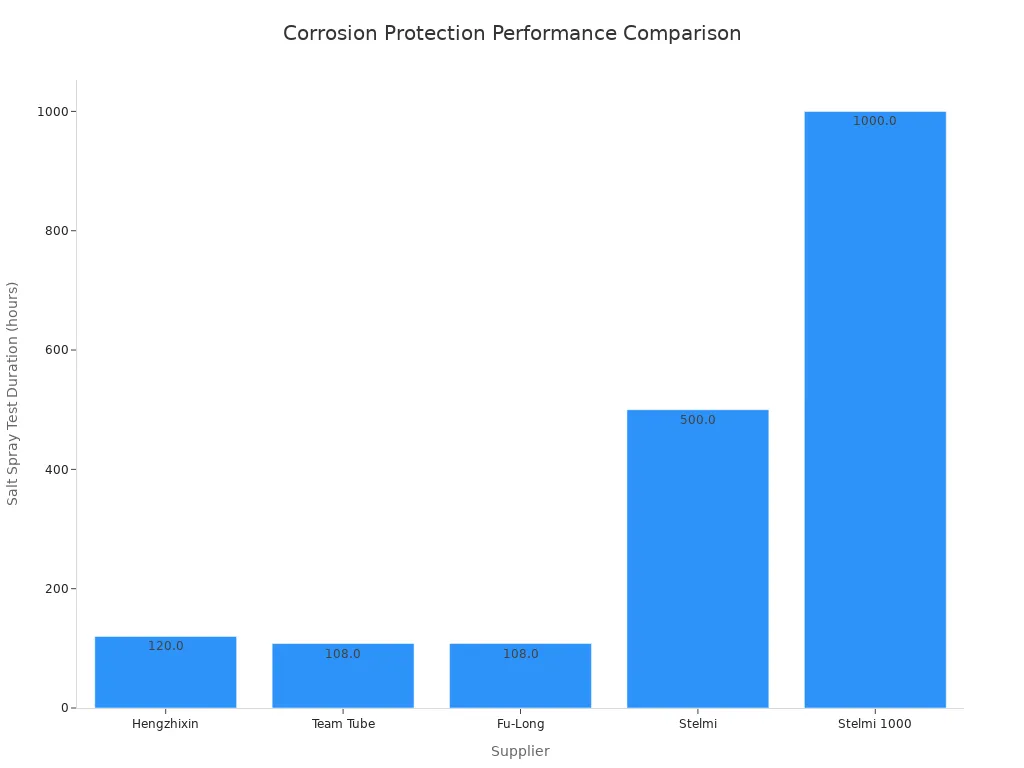
Salt spray testing shows how each surface handles moisture and chemicals. HZX Hardware compared small-size induction-hardened chrome-plated rods from several suppliers using the ASTM B117 neutral salt spray test. The results appear below.
Supplier | Salt Spray Test (NSS, ASTM B117) | Corrosion Resistance Level |
|---|---|---|
Hengzhixin | 120+ hours | Good |
Stelmi | 500+ hours | Excellent |
Stelmi 1000 | 1000+ hours | Superior |
Team Tube | 96–120 hours | Good |
Fu-Long | 96–120 hours | Good |
HZX Hardware also published a bar chart that compares salt spray hours across these suppliers.
QPQ treatment adds a black oxide layer that blocks water and chemicals. According to HZX Hardware, this layer helps chrome plated rods last 200 to 500 hours in salt spray tests. The same source notes that QPQ offers better corrosion resistance in humid or chemical settings and is more environmentally friendly than traditional chrome plating. For dampers in coastal air, wash-down zones, or humid plants, that oxide layer earns its place.
Cost and Machinability
Processing Cost and Total Cost of Ownership
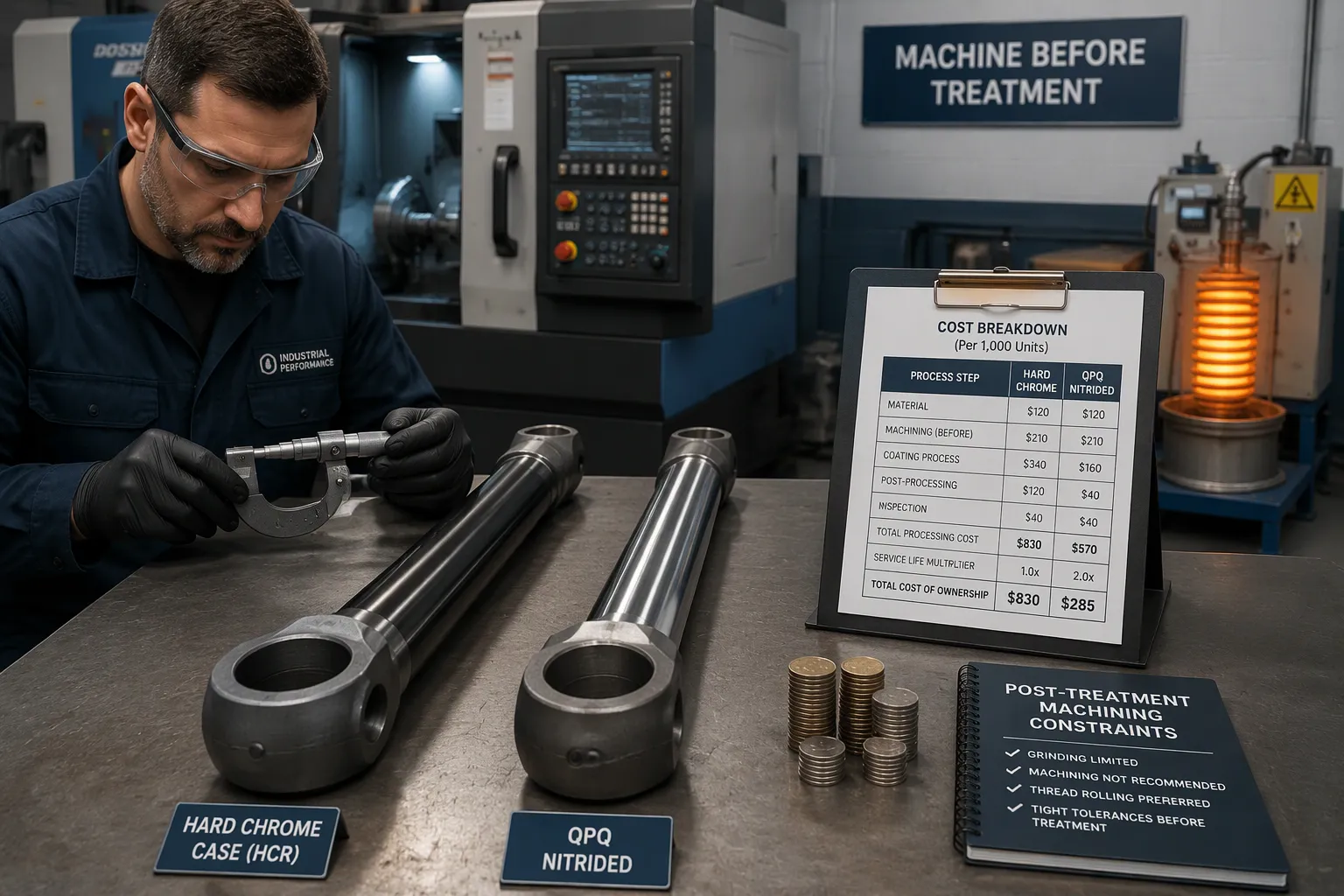
Induction hardening makes a standard chrome rod cost more. The extra step needs a coil, a quench system, and a straightening pass between drilling and plating. Buyers pay more for each rod up front. That higher price often pays off in severe service. A hardened rod survives abrasive grit and heavy shock loads for many more cycles. Each replacement has its own cost: the part, the downtime, and the labor. Fewer replacements lower the total cost of ownership over the damper's life.
QPQ treatment changes the cost picture in a different way. The salt-bath process builds a hard, corrosion-resistant compound zone, and the final polish leaves a surface roughness of Ra ≤ 0.2μm. That smooth finish lowers friction at the seal contact. Less friction means less heat and less wear on both the rod and the seal. Maintenance teams replace seals less often, and the damper keeps its performance longer. For corrosive or moderate-load duty, this combination gives strong value without the high price of a deep hardened case.
Post-Treatment Machining
Both treatments limit what a shop can do to the rod afterward. Induction hardening creates a case of roughly 1.5–6 mm, and that hard layer resists cutting tools. Any turning, threading, or grooving must happen before the hardening step. Manufacturers plan the order carefully: deep-hole drilling first, then hardening, then straightening, then chrome plating. A late design change that needs a new feature on the hardened zone forces a re-run of the whole line.
QPQ rods follow a similar rule. The compound zone is thin, so a finishing cut after treatment would strip away the very layer that provides the hardness and corrosion protection. Shops machine the rod to final size before the salt-bath cycle. The polish stage inside the QPQ sequence handles the final surface quality, and it reaches Ra ≤ 0.2μm without further cutting. Designers who specify grooves, flats, or threads should place them before treatment and confirm the dimensions with the supplier. This early planning keeps scrap low and protects the treated surface through the final assembly.
Which Lasts Longer: The Verdict
Why Induction Hardened Rods Win in Severe Service
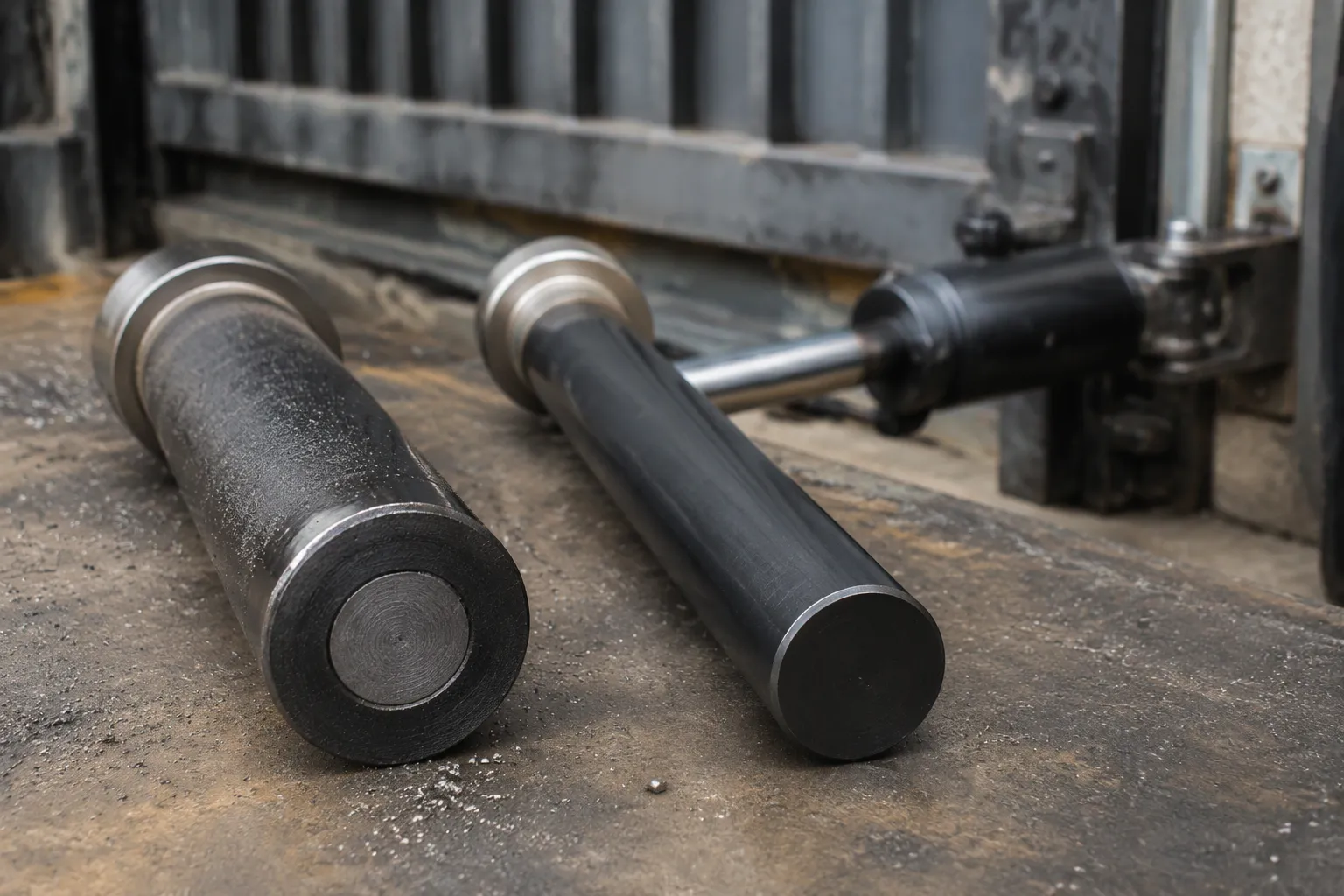
For really tough jobs, the proof points to one answer. Induction hardened rods usually last longer in severe, high-load, abrasive high-cycle damper uses. Three traits make this happen. The surface reaches HRC 50–60, the case runs about 1.5–6 mm deep, and the tough core takes shock without permanent deformation. A rod with that much hardened material in reserve keeps its sealing surface through far more cycles than a thin treated layer can.
Think about a damper on a sliding industrial gate that opens and closes all day in a dusty plant. Grit rides the rod into the seal on every stroke. A plain chrome layer over soft steel scratches and wears through. The induction hardened case resists that scraping and holds its hardness long after a thinner surface would fail. The same logic applies to car suspension parts and heavy hydraulic systems, where sudden shocks and nonstop cycling test the rod surface every shift.
The higher purchase price does not change this conclusion. Buyers pay more per rod for the hardening step, the quench system, and the straightening pass. Fewer replacements, less downtime, and lower labor costs usually make up for that extra cost across the damper's service life. On the question of which lasts longer under abrasive, high-load cycling, the hardened rod holds the advantage.
Where QPQ Rods Fit Best
QPQ rods win a different contest. Their compound zone gives HRC 40–45 hardness, salt spray resistance beyond 120 hours, and a surface roughness of Ra ≤ 0.2μm. That mix suits corrosive or moderate-load high-cycle dampers very well. Coastal air, wash-down zones, humid plants, and outdoor hardware all favor the black oxide layer that blocks water and chemicals.
The smooth finish also helps at the seal contact. Low friction means less heat and less drag on every stroke, so both the rod and the seal wear more slowly. Furniture gas springs, office chairs, medical beds, and automotive trunk and hood struts run comfortably within this range. Buyers weighing which lasts longer in those settings often find the QPQ rod gives strong value without the cost of a deep hardened case.
Neither treatment is always better. The right choice follows the damper's load profile, its operating environment, and the budget. HZX supplies both options, so the decision rests on the application rather than on availability. HZX piston rods come in solid and hollow setups, with diameters from 6mm to 30mm and a maximum length of 1000mm. Base materials include C45 and C35 carbon steel plus 304, 316, and 316L stainless steel. The company holds ISO9001 certification and provides SGS test reports to back up each specification.
Induction hardened rods usually last longer in tough, high-load, scratchy high-cycle damper jobs. QPQ rods give strong rust protection and smooth running, so they work well in corrosive or moderate-load service. Which one lasts longer depends on how the damper is used, not on one answer for everyone.
The comparison comes down to a few points. Induction hardening gives HRC 50–60 hardness with a deep case. QPQ gives HRC 40–45 hardness, salt spray resistance beyond 120 hours, and a surface roughness of Ra ≤ 0.2μm. Cost and machinability also change the balance.
HZX supplies both treatments. Buyers should match the treatment to the damper's load profile, environment, and budget.
FAQ
Do induction hardened rods always outlast QPQ rods?
No. Induction hardened rods last longer in severe, high-load, abrasive high-cycle damper service. QPQ rods do well in corrosive or moderate-load duty. The damper's load profile and environment decide which lasts longer. So neither treatment wins every case.
How do the hardness values compare?
Induction hardening reaches HRC 50–60 with a case depth of roughly 1.5–6 mm. QPQ treatment reaches HRC 40–45 through a thin compound layer over a diffusion zone. The deeper case gives induction hardened rods more hardened material in reserve.
Which treatment suits coastal or humid damper installations?
QPQ rods fit these settings well. Their black oxide layer helps the surface pass salt spray testing beyond 120 hours. The Ra ≤ 0.2μm finish also keeps friction low at the seal. Induction hardened rods with chrome plating remain a solid option for heavier loads in the same environment.
What rod sizes and materials does HZX offer?
HZX piston rods come in solid and hollow setups, with diameters from 6mm to 30mm and a maximum length of 1000mm. Base materials include C45 and C35 carbon steel plus 304, 316, and 316L stainless steel. The company holds ISO9001 certification and supplies SGS test reports.


