
 Product Search


Comparing Bike Front Shocker Rods for Mountain and E-Bikes
 Apr 13, 2026|
 View:485
You want the best bike front shocker rod for mountain and e-bikes. Quality matters most when you choose a bike front shocker rod. The right material and surface treatment give your bike front shocker rod power and long life. The QPQ Bicycle Front Fork Damping Rod stands out for high performance. Mountain and e-bike riders need a bike front shocker rod that fits their riding style and fork type. You should always check your bike front shocker rod for the best match.
Key Takeaways
Pick the right bike front shocker rod for your riding style and where you ride. The right fit makes your ride more comfortable and easier to control.
Choose rods made from strong materials like C45 steel if you want them to last longer. Pick stainless steel rods if you ride in wet places because they do not rust easily.
Think about getting rods with QPQ surface treatment. This treatment helps the rod move smoothly and last longer. It also stops the rod from wearing out fast.
Bike Front Shocker Rod Anatomy
Structure and Function
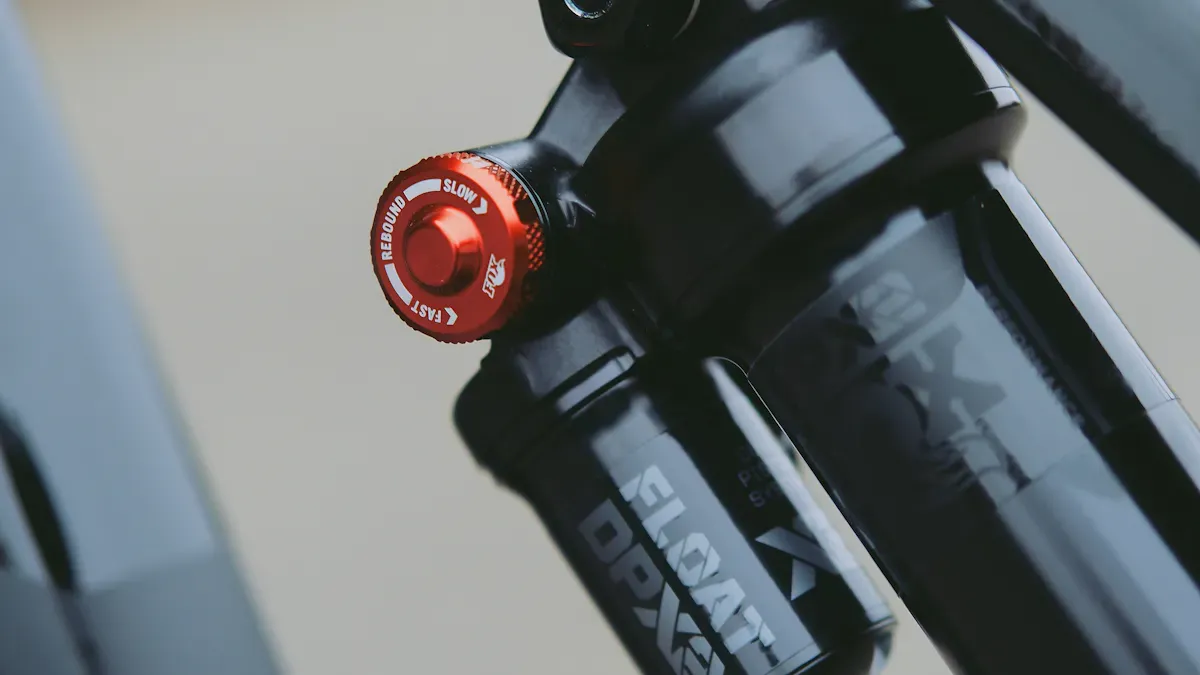
You can think of the bike front shocker rod as the backbone of your suspension fork. This rod connects the upper part of the fork to the damping system inside. When you ride over bumps, the rod moves up and down, helping your fork absorb shocks and keep your ride smooth.
The QPQ Bicycle Front Fork Damping Rod from Changzhou Hengzhixin Machinery Co., Ltd. comes in diameters from 6mm to 30mm. You can choose a rod that fits your fork size. The rod uses strong materials like C45 or C35 steel, and 304, 316, or 316L stainless steel. Each rod gets a special QPQ (Quench-Polish-Quench) surface treatment. This process makes the rod extra hard and smooth.
Tip: A smoother rod means less friction. Your fork will move more easily, and the seals will last longer.
Surface finish, hardness, and straightness matter a lot. If the rod is not straight, your fork may feel rough or even leak oil. A hard surface protects the rod from scratches and wear. A smooth finish helps the seals glide without damage.
Hollow vs Solid Rods
You can find both hollow and solid rods in bike forks. Hollow rods weigh less, which helps your bike respond faster to bumps. Solid rods give extra strength for heavy-duty riding.
Rod Type | Weight | Best For |
|---|---|---|
Hollow | Lighter | Fast, responsive rides |
Solid | Heavier | Extra strength needed |
You should pick the rod type that matches your riding style and the terrain you ride most often.
Materials & Surface Treatment
Steel vs Stainless Steel
You need to know about the materials inside your mountain bike suspension. C45 and C35 steel give you strong rods that handle heavy loads. These steels work well for riders who want toughness and long life. Stainless steel, like 304, 316, and 316L, resists rust and stays clean even in wet or muddy conditions. If you ride near the coast or through salty roads, stainless steel helps your mountain bike suspension last longer.
Note: Stainless steel rods are great for riders who want less maintenance and more protection from the elements.
QPQ Process Benefits
You want your bike front shocker rod to move smoothly and resist damage. The QPQ (Quench-Polish-Quench) surface treatment makes this possible. This process creates a hard, smooth layer on the rod. It fights corrosion and lowers friction, so your fork works better and lasts longer.
Here is a quick comparison:
Feature | QPQ Treatment | Traditional Hard Chrome Plating |
|---|---|---|
Wear Resistance | More than 2x higher | Standard level |
Corrosion Resistance | 20x better (48 hours in salt spray) | Standard level |
You get a rod that slides easily and stays strong, even after many rides. The QPQ finish protects your rod from sweat, mud, and road salt. Your mountain bike suspension will feel smoother and need fewer repairs.
Suspension Fork Types & Comparison
MTB Fork vs E-Bike Fork
You need to know how suspension forks differ between mountain bikes and e-bikes. Both types of forks help you ride smoothly over rough ground, but they have unique features. Mountain bike forks focus on light weight and quick response. E-bike forks use thicker stanchions and stronger materials to handle extra weight and power.
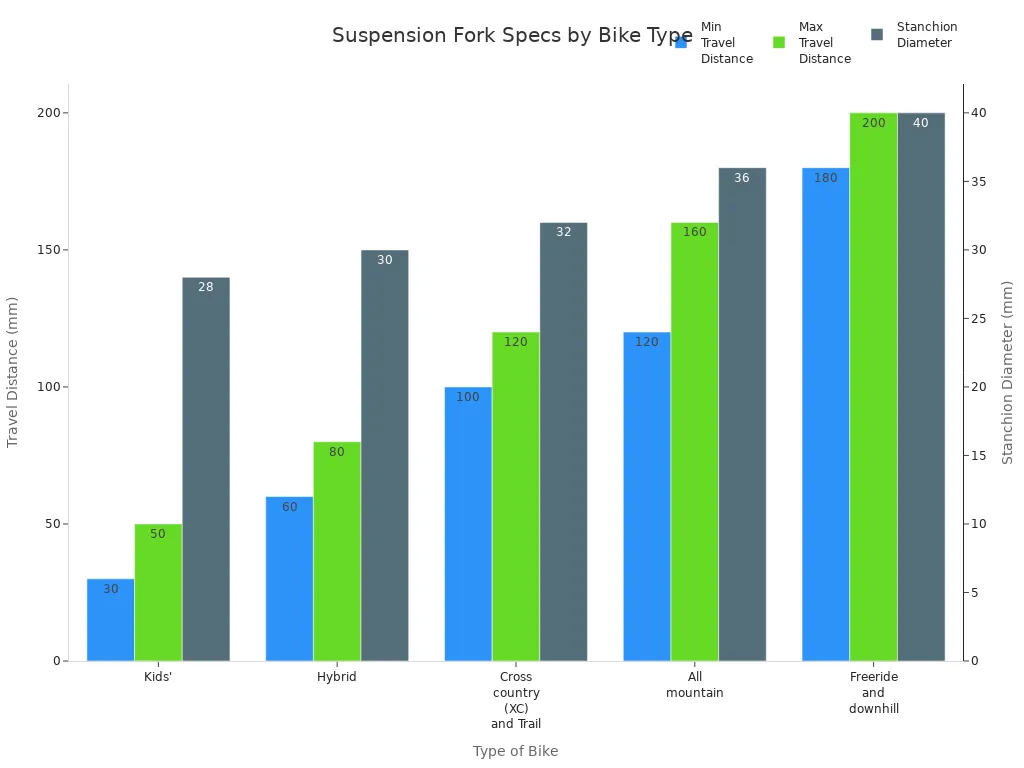
You can see the main differences in travel, stanchion diameter, and adjustability. Mountain bike forks usually have travel from 100mm to 160mm. E-bike forks often start at 100mm and go up to 180mm for electric mountain bikes. Thicker stanchions, usually 36mm to 40mm, give e-bike forks more stiffness and durability. This helps you control your bike at higher speeds and with more weight.
Tip: If you ride an e-bike, choose a fork with thicker stanchions and longer travel for better performance and safety.
Here is a table to help you compare:
Type of Bike | Travel Distance (mm) | Stanchion Diameter (mm) |
|---|---|---|
Kids' | 30 - 50 | 28 |
Hybrid | 60 - 80 | 30 |
Cross country (XC) and Trail | 100 - 120 | 32 |
All mountain | 120 - 160 | 34-36 |
Freeride and downhill | 180 - 200 | 38-40 |
You can also look at this chart to see how travel and stanchion diameter change for different bikes:
Suspension forks use two main spring systems. Coil springs give you a steady feel, while air springs let you adjust the fork for your weight and riding style. Air springs make the fork lighter and easier to tune.
Best Mountain Bike Forks for Performance
You want the best mtb fork for great performance. Top brands like RockShox and FOX lead the way. The best mountain bike forks offer advanced adjustability, low weight, and smooth action. You can change settings like high-speed compression, low-speed compression, and rebound to match your trail.
Here is a table of some top-rated forks for performance:
Brand | Model | Travel | Adjustments | Weight (g) | Price (€) |
|---|---|---|---|---|---|
RockShox | ZEB Ultimate | 160-190 | HSC, LSC, Rebound | 1,249 | 2,358 |
RockShox | Lyrik Ultimate | 140-160 | HSC, LSC, Rebound | 1,199 | 2,027 |
FOX | 38 GRIP X2 | N/A | N/A | N/A | N/A |
FOX | 36 with GRIP X | N/A | N/A | N/A | N/A |
You should look for a fork with easy adjustability. This lets you fine-tune your suspension for different trails and weather. The best mtb fork for performance will give you control, comfort, and speed.
Note: More adjustments mean you can set your fork for rocky, rooty, or smooth trails. This gives you great performance every ride.
Best MTB Fork for Durability
You want a fork that lasts for years. The best mtb fork for durability uses strong materials like steel or titanium. Steel forks can last over 20 years if you keep them clean and dry. Titanium forks also last a long time and resist fatigue. Aluminum forks are lighter but may wear out faster with heavy use.
Steel forks: Over 20 years of use, very strong.
Titanium forks: Excellent for long life, resist bending.
Aluminum forks: 10 to 15 years, lighter but less durable.
Carbon fiber forks: 5 to 10 years, light but can break from hard impacts.
Regular maintenance helps your fork last longer. Check for rust on steel forks and cracks on carbon forks. Clean your fork after muddy rides and check the seals for leaks.
Tip: Choose a fork that matches your riding style and weight. Heavier riders and e-bike users should pick forks with higher weight capacity and thicker stanchions.
When you select a fork, make sure it fits your bike’s wheel size and steerer tube. Most mountain bikes use 27.5" or 29" wheels. Check if your frame needs a straight or tapered steerer tube. The fork should match your bike’s geometry for the best performance.
Match the fork to your wheel size (27.5", 29").
Check the steerer tube type (straight or tapered).
Make sure the fork fits your bike’s head tube and frame.
You can get the best mtb fork for durability by choosing the right material, keeping up with maintenance, and making sure it fits your bike. This will give you smooth rides and great performance for many years.
Selection Criteria for Bike Front Shocker Rod
Choosing the right bike front shocker rod can make a big difference in your ride. You want to feel comfort, control, and support every time you hit the trail or road. This buyer's guide will help you pick the best rod for your needs by looking at suspension travel, fit, compatibility, and value.
Suspension Travel & Damping
Suspension travel is the distance your fork moves up and down when you ride over bumps. More suspension travel gives you better shock absorption and comfort on rough trails. Less travel means your bike feels lighter and pedals more efficiently. You need to find the right balance for your riding style.
Bike Type | Recommended Suspension Travel |
|---|---|
Mountain Bikes | 120–160 mm |
E-Mountain Bikes | 140–170 mm |
If you ride cross-country, a travel length of about 100mm gives you enough support and control without adding too much weight. For enduro or downhill, you want fork travel closer to 160mm or more. E-bikes often need even more suspension travel to support the extra weight and power.
Tip: More suspension travel means more comfort, but it can also make your bike heavier. Think about the terrain you ride most often and choose the right fork travel for your needs.
A good damping system helps you control how fast your fork moves. High levels of adjustability in damping let you fine-tune your ride for different trails. You get more comfort and support when you can adjust your suspension to match your weight and riding style.
More suspension travel gives better shock absorption and comfort.
Increased travel can add weight and reduce pedaling efficiency.
Find a balance between travel and control for your favorite terrain.
Fit & Compatibility
You need to make sure your bike front shocker rod fits your fork and bike frame. The right fit gives you better steering, control, and support. If the rod is too short or too long, your suspension will not work well. Always check the diameter and length of the rod to match your fork and wheel size.
Check that the fork's steerer tube diameter matches your bike frame.
Make sure the crown race and brake mounts fit your setup.
Choose a rod that supports your wheel size, like 27.5, 29, or 29+ inches.
E-bikes may have special requirements for fork size and mounting standards.
Proper fit also helps with steering and comfort. When everything matches, you get smooth control and better support on every ride. This buyer's guide recommends measuring your current fork and checking the manufacturer's specs before you buy a new rod.
Price vs Value
You want the best value for your money. High-quality bike front shocker rods come in a range of prices. Some offer more features, like high levels of adjustability or rebuildable designs. Others focus on strong construction and long service life. Look at what you get for the price, not just the cost alone.
Model | Price (per pair) | Rebuildable | Construction Type | Travel (inches) | Pre-load Adjustment | Remarks |
|---|---|---|---|---|---|---|
48090 Shock | $71.50 | No | Steel single-wall | 3.75 | Yes | Includes mounting kit with bushings and spring retainers. |
KONI 76F-1250SP1 | $68.00 | Yes | Steel single-wall | 3.25 | Yes | Externally adjustable footvalve; rebound damping tunable. |
MICKEY THOMPSON 36-320-H1 | $60.00 | No | Single-wall DeCarbon | 3.5 | Yes | Four damping rates available. |
MULHOLLAND LTG 130F | $89.95 | Yes | Steel dual-wall | 4.0 | No | Available in two damping rates; user-changeable damping rates. |
NUMBER ONE PRODUCTS FP3301-S | $69.95 | Yes | Steel dual-wall | 4.0 | Yes | Offers three damping rates; includes rebuilding kits. |
RED WING G-330-85 (medium) | $61.90 | No | Steel single-tube | 3.4 | Yes | Nitrogen gas segregated from oil by floating piston. |
S&W H525-3 | $63.90 | No | Steel double-wall | 4.1 | Yes | Improved version available. |
WORKS PERFORMANCE | $114.50 | Yes | Steel single-wall | 5.0 | No | Custom built shocks available based on motorcycle model and rider weight. |
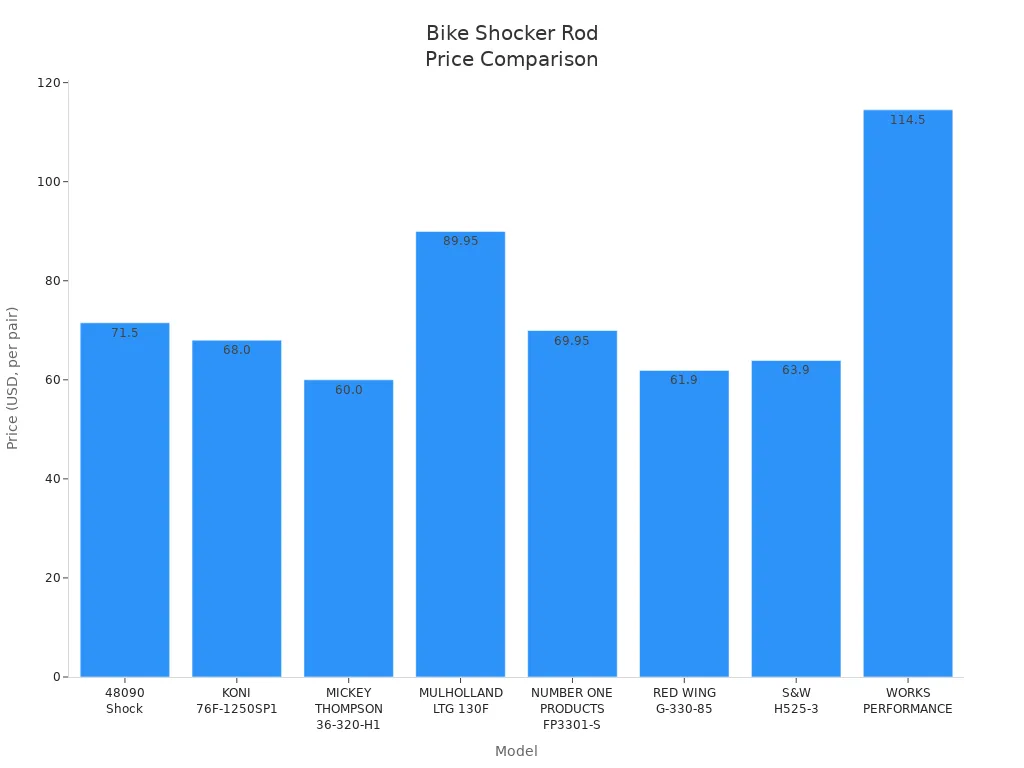
When you compare price and value, think about how much comfort, control, and support you get for your money. Some rods cost more because they offer high levels of adjustability or longer service life. Others may be less expensive but still give you good support and comfort for everyday rides.
Note: Always match the rod diameter and length to your fork and wheel size. This ensures the best fit, comfort, and control.
This buyer's guide suggests looking at your riding style, terrain, and fork type before you buy. The right bike front shocker rod will support your steering, comfort, and control on every ride.
Setup & Maintenance Tips
Installation Guide
You want your fork setup to work at its best. Start by removing your wheel, brake calipers, and handlebars. This gives you access to the fork tubes. Drain the old fork oil by compressing the fork and tilting it. Take out the fork spring and use a seal puller to remove the dust and oil seals. Unscrew the damper rod bolt at the bottom of the fork leg. Clean the inside of the fork tube before you begin the new setup. Insert the new shocker rod, making sure it lines up with the fork’s channels. Apply a light coat of fork oil to the new seals. Press them into place. Use a syringe to add the right amount and type of fork oil. Cycle the fork a few times to remove air bubbles. Reassemble all parts and tighten bolts to the correct torque. Test your fork setup by compressing the fork and checking for smooth movement.
Tip: Always follow the manufacturer's instructions for tuning and setup to keep your suspension safe and smooth.
Routine Care
You can keep your bike front shocker rod working longer with regular setup and care. Clean the fork stanchions and seals with a soft brush and mild soapy water. Lubricate the stanchion with fork oil or stanchion lube to reduce friction. Remove and check the dust wipers for wear. Replace them if needed. Check the foam ring and soak it in suspension fork oil for better lubrication. Change the fork oil every 15,000 to 20,000 miles to keep your tuning sharp. Clean dust seals after off-road rides and use silicone grease to stop cracking.
Troubleshooting
You should check your fork setup often for signs of trouble. Look for dents, bends, or rust on the shocker rod. Watch for oil leaking down the shock body or around the seals. Leaks mean the seals may have failed. If you see these problems, stop riding and fix them right away. Avoid over-tightening bolts during setup, as this can damage threads or warp the rod. Do not mix different types of fork oil, as this can cause poor tuning and erratic damping. Replace worn seals quickly to prevent damage to the whole fork system.
Note: Early tuning and setup checks help you catch problems before they get worse. This keeps your rides safe and smooth.
Recommendations for Riders
Best Choices for Mountain Bikers
You want a bike front shocker rod that gives you control and comfort on rough trails. For mountain biking, you need a rod that handles bumps, rocks, and drops. Choose a rod made from strong steel like C45 or C35. These materials give you the toughness you need for hard rides. If you ride in wet or muddy places, stainless steel rods like 304 or 316 work well. They resist rust and stay smooth.
The QPQ Bicycle Front Fork Damping Rod stands out for mountain bikers. The QPQ surface treatment makes the rod extra hard and smooth. This means your fork moves easily and lasts longer. You get less friction and more control. The rod comes in many sizes, so you can find one that fits your fork.
Tip: Pick a hollow rod if you want a lighter bike that reacts fast. Choose a solid rod if you need more strength for jumps and drops.
Best Choices for E-Bike Riders
E-bikes are heavier and faster than regular bikes. You need a front shocker rod that can handle the extra weight and power. Look for rods with a larger diameter, like 10mm to 30mm. These give you more support and keep your ride safe.
The QPQ Bicycle Front Fork Damping Rod is a smart choice for e-bike riders. The QPQ treatment protects the rod from sweat, mud, and road salt. You get smooth action and long life, even in tough conditions. Stainless steel rods are best if you ride in rain or near the sea.
Rider Type | Best Material | Surface Treatment | Rod Type |
|---|---|---|---|
Mountain Biker | C45/C35 Steel | QPQ | Hollow/Solid |
E-Bike Rider | 316 Stainless | QPQ | Solid |
Note: Always match the rod size to your fork and wheel for the best fit and performance.
You should choose your fork shocker rod based on your bike type, terrain, and how much maintenance you want. For rocky trails, pick a strong suspension fork. For smooth paths, a lighter fork works well. Always consider advanced options like QPQ. Consult a local suspension specialist for expert advice.
FAQ
What is the main benefit of a QPQ-treated shocker rod?
You get a rod that resists rust and wear. Your fork moves smoother and lasts longer, even in tough riding conditions.
How do you know if your shocker rod needs replacing?
Check for oil leaks, rust, or bends. If your fork feels rough or noisy, you should inspect and replace the rod.
Can you use the same shocker rod for both mountain bikes and e-bikes?
Bike Type | Shocker Rod Needed |
|---|---|
Mountain Bike | Standard or Hollow |
E-Bike | Thicker, Stronger Rod |
You should match the rod to your bike’s weight and fork size.
Recommended Products


Recent News
1.Hydraulic Damping Rod for Bike Front Fork Performance
2025-05-292.Comprehensive Guide to Motorcycle Front Fork Oil Rod: Function, Maintenance, and Replacement
2025-05-213.Comparing Bike Front Shocker Rods for Mountain and E-Bikes
2026-04-134.How to Select a High-Quality Hard Chrome Plated Rod for Your Bike’s Steerer Tube
2026-04-02


