
 Product Search


HZx Hardware: Advanced Hollow Rods for Fork Manufacturers
 Aug 26, 2026|
 View:156
What if you could make your fork assembly 30% lighter and still make it last longer? HZX's Advanced hollow rods do exactly that. These precise parts are the heart of gas springs and linear motion systems.
You can pick a diameter from Φ6 to 30mm. Choose C45, C35, or stainless steel. The QPQ surface treatment gives a hardness of 900–1200 HV and a smoothness of Ra ≤ 0.2μm. This mix gives you light weight without losing strength.
These Advanced Hollow Rods fix your weight and durability issues head-on. You get better fuel economy and can carry more load. The engineering perks, material science, and how to put it all together are explained below.
Key Takeaways
Hollow rods cut weight by up to 30% without losing strength.
QPQ surface treatment makes rods hard and smooth, lasting longer.
Choose from C45, C35, or stainless steel for different needs.
Hollow rods save money on materials and shipping.
HZX offers free samples and a three-year warranty for confidence.
Performance Gains with Advanced Hollow Rods
Hollow rods give you a direct way to improve your fork assembly. You remove material from the center where it adds little to stiffness. This reduces mass by up to 30% compared to solid rods. Your forklifts and automotive forks then use less fuel and can carry more load. The strength-to-weight ratio improves significantly.
Weight Reduction and Strength-to-Weight Ratio
The geometry of a hollow rod is the key. It has the same outer diameter as a solid rod but much less weight. For a given buckling resistance, the hollow rod is far lighter. This matters for long-stroke vertical cylinders where rod weight is a concern. Mobile equipment and aerospace test rigs benefit directly.
Hollow rods buy you a better strength-to-weight ratio for the same buckling resistance, because second moment of area I scales with d^4 while mass scales with d^2. For a long-stroke vertical cylinder where rod weight matters (mobile equipment, aerospace test rigs), a hollow rod with 70% of the OD as ID gives roughly 75% of the buckling resistance at 50% of the weight.
This means you can design a lighter fork without losing stability. Your application gains efficiency and payload capacity. The weight savings also reduce shipping costs and make installation easier.
Enhanced Stiffness and Fatigue Resistance
Weight reduction is only part of the story. The hollow rods from HZX also feature a QPQ surface treatment. This process gives your rods a surface hardness of 900–1200 HV. The roughness is Ra ≤ 0.2μm. These numbers mean your rods resist wear and last longer.
Under cyclic loading, the surface treatment prevents cracks from starting. The hard, smooth surface reduces friction and fatigue. Your fork assembly can handle millions of cycles without failure. The hollow design also helps with energy absorption. The rod can flex slightly under load, spreading stress more evenly.
You get a part that is both light and tough. The combination of hollow geometry and QPQ treatment delivers extended service life. This is a direct improvement over solid rods that are heavier and may wear faster.
By choosing HZX Advanced Hollow Rods, you upgrade your fork design. You enjoy lower weight, better strength ratio, and superior durability. The next section will show you how these rods compare to solid rods in detail.
Material Science and Manufacturing Precision
The materials you pick affect how your fork assembly works. HZX offers three types of steel for Advanced Hollow Rods. Each one works best in different conditions. Picking the right type helps your rods last for many years.
Material Grade | Best Application |
|---|---|
C45 (standard) | Normal machines, factory dampers, and everyday jobs that need strong parts that resist wear |
C35 (35# steel) | Factory dampers and common machines where you want a good mix of strength and easy shaping |
Stainless Steel (304/316) | Wet or salty places, boats and coast work, chemical plants, and outdoor uses like solar panels |
High-Grade Alloys and QPQ Surface Treatment
You should choose the material based on your work environment. C45 gives you strong performance for most industrial jobs. C35 is easier to cut when you need very exact sizes. Stainless steel stops rust in harsh conditions. All three types keep the same exact size from Φ6 to 30mm.
The QPQ process changes the rod's surface. It creates a hard nitride layer that greatly improves wear resistance. The table below shows the benefits you get:
Property | Value |
|---|---|
Surface hardness | 900–1200 HV from a layer of iron nitrides and carbonitrides |
Corrosion protection | A final black oxide coating stops rust |
Salt spray resistance | 200–500 hours or more, compared to 24–120 hours for normal hard chrome rods |
This treatment gives you a surface that resists scratches and pits. Your rods keep a smooth finish even under constant rubbing. The black oxide layer adds another shield against water and chemicals.
ISO9001-Certified Quality Control
You need every batch to be the same. HZX uses an ISO9001-certified quality system. This certification means each rod goes through the same strict checks from start to finish. SGS testing adds extra independent proof.
The salt spray test shows how well your rods resist rust. Normal hard chrome rods usually fail after 24–120 hours in this test. HZX rods last 200–500 hours or more. This extra protection means fewer replacements and less downtime for your equipment.
You also get full paperwork with your order. Test reports confirm the hardness, smoothness, and rust resistance of each batch. This tracking helps you meet your own quality standards and gives you trust in your supply chain.
Hollow Rods vs. Solid Rods: A Comparative Analysis
When you design a fork assembly, you pick between hollow and solid rods. Each option has different benefits for weight, strength, and cost. This section looks at both designs side by side. You need to know the trade-offs to choose the right one for your job.
Performance Under Load and Stress
The table below shows how hollow and solid rods compare on key performance attributes.
Performance Attribute | Hollow Rod | Solid Rod |
|---|---|---|
Weight | Lighter, easier to handle | Heavier, more challenging to handle |
Strength | Reduced structural integrity, higher risk of bending under heavy loads | Enhanced structural integrity, withstands high pressure and heavy loads |
Sealing | Harder to maintain proper sealing, risk of leaks | Superior sealing capabilities, prevents leaks |
Versatility | Allows fluid/gas passage, space for sensors, easier maintenance | Limited internal space, less customization options |
Weight matters most for moving parts. A hollow rod with the same outer size as a solid rod takes out material from the middle. That middle material does little to stop bending. You get a rod that is much lighter but still strong enough for most tasks. The strength-to-weight ratio gets much better.
Fatigue life is another key factor. HZX's Advanced Hollow Rods use the QPQ treatment to fix strength issues. The hard surface layer reaches 900–1200 HV. This resists wear and stops cracks from starting under repeated loads. The hollow design also lets the rod bend a little under load. This bending spreads stress more evenly across the rod. The result is better energy absorption and a longer life than a solid rod of the same size. Solid rods cannot bend the same way because the solid core blocks movement. This makes hollow rods better for jobs with many load cycles.
Stiffness depends on the type of load. For pure pull or push, a solid rod handles more force. For bending and buckling, the hollow rod does well. The material sits at the outer edge where it helps most with bending resistance. The second moment of area depends on the radius to the fourth power. Hollow rods keep the outer radius while removing inner material. This gives you nearly the same bending stiffness at a fraction of the weight.
Sealing is a real worry for hollow rods. You need proper end caps or seals to stop leaks. The inner space gives you new options. You can pass fluid or gas through the rod. You can run sensor wires inside the hollow cavity. This opens design ideas that solid rods simply cannot offer.
Tip: Pick a hollow rod if you want a lighter bike that reacts fast. Choose a solid rod if you need more strength for jumps and drops.
Cost-Effectiveness and Manufacturing Compatibility
The total cost of ownership favors hollow rods in many cases. Hollow rods weigh about 40 to 70 percent of solid rods with the same outer size. This means you save 30 to 60 percent in material weight. Less material goes into each rod. This lowers the cost per foot compared to solid rods.
The lighter weight also cuts shipping costs. You pay less to move each rod. This adds up fast when you order large amounts. The savings on material and shipping often cover any extra machining costs for hollow parts. You get a lower total cost over the life of the product.
HZX offers a three-year warranty on all Advanced Hollow Rods. This warranty covers defects and performance issues. You lower the risk of surprise replacement costs. The warranty gives you trust in your supply chain. You can plan your budget without worrying about early failures.
The manufacturing process for hollow rods is well proven. HZX uses the same ISO9001-certified quality system for hollow and solid rods. You get the same precision and consistency. The QPQ treatment works equally well on both types. You can switch to hollow rods without changing your machining setup. This makes the change simple and low-risk.
For most fork applications, the hollow rod gives you the best mix of performance and cost. You save weight, use less material, and cut shipping costs. You get a rod that lasts longer under repeated loads. You open new design ideas for your assembly. The choice becomes clear when you look at the full picture.
Integrating HZX Hollow Rods into Your Fork Design
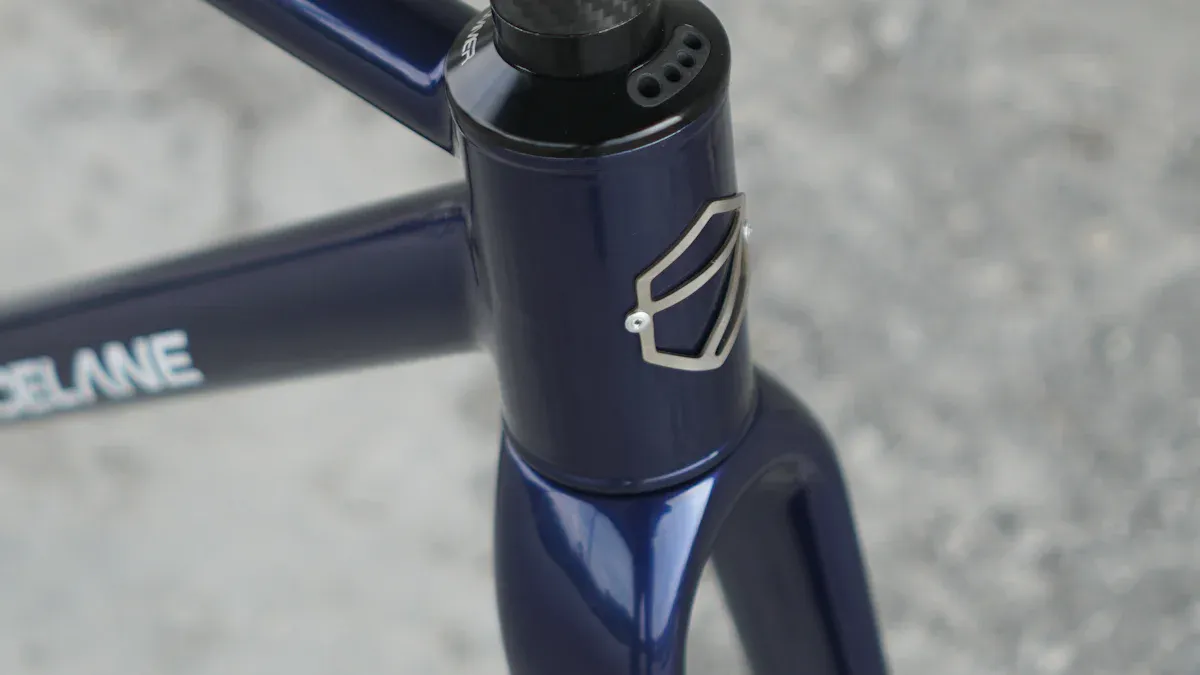
Switching to hollow rods takes some planning. You need to look at your current fork design and figure out where changes fit. The good news is that the change is easy. HZX makes these rods to work with standard machining processes. You can keep most of your existing setup.
Design Adaptations and Machining Compatibility
Start with your tolerances. Hollow rods have the same outer diameter as solid rods. Your existing seals, bushings, and guides still fit. The inner hole changes the wall thickness, so you must check the strength at connection points. Threaded ends and weld joints need enough material to hold securely. HZX can supply rods with pre-machined ends to match your drawings.
You also have the option of OEM CK45 chrome-plated hollow rods. This material gives you a hard chrome surface for extra wear resistance. It suits applications where the QPQ finish is not the best fit. You can request this option for specific product lines. The chrome plating meets the same diameter range and length limits as the standard rods.
The machining process itself stays simple. You can cut, drill, and thread these rods with standard tools. The QPQ surface is hard, so you need carbide inserts for best results. The surface roughness of Ra ≤ 0.2μm means you do not need extra polishing steps. Your production line keeps its current speed.
Streamlined Supply Chain and Custom Solutions
HZX offers a one-stop service that simplifies your procurement. You send your drawings, and they provide free samples for testing. This lets you verify fit and performance before you commit to a full order. You also receive test reports that document hardness, roughness, and corrosion resistance for each batch.
Weight and shipping cost calculations come with every quote. You know exactly what each rod weighs and what freight will cost. This helps you plan your budget with confidence. HZX also supports other gas spring accessories, so you can source multiple parts from one supplier. Fewer vendors mean fewer delays and simpler quality control.
The three-year warranty covers defects and performance issues. You reduce the risk of unexpected failures. This warranty, combined with the free samples and test documentation, makes the switch to Advanced Hollow Rods a low-risk decision. You get the performance benefits without the usual supply chain headaches.
Using HZX's hollow rods is a smart choice for your business. You get real gains in how well it works, how long it lasts, and how much you save. The hollow shape cuts weight by up to 30%. The QPQ treatment gives a hardness of 900–1200 HV and a smoothness of Ra ≤ 0.2μm. It also resists salt spray for over 200 hours. These features help the rod last longer when it is used over and over again.
You also save money. Using less material lowers your costs. Lighter rods mean lower shipping costs. The three-year warranty protects what you spend. Full support includes free samples, test reports, and custom quotes.
Start your evaluation today. Contact HZX for free samples, request a custom quote, or download a technical datasheet. See the difference for yourself.
FAQ
How much weight can I actually save with hollow rods?
You can cut rod weight by up to 30% compared to solid rods with the same outer size. The hollow middle removes material that does little to help bending strength. Your fork assembly gets lighter without losing stability or load capacity.
What makes QPQ treatment better than standard chrome plating?
QPQ gives a surface hardness of 900–1200 HV and a smoothness of Ra ≤ 0.2μm. It survives salt spray tests beyond 200 hours, beating regular hard chrome. The treatment forms a nitride layer that fights wear and rust at the same time. Your rods last longer under repeated loading cycles.
Which material should I choose for my application?
C45 works well for general industrial use and resists wear. C35 is easier to machine for tight tolerances. Stainless steel grades 304/316 handle wet or corrosive environments. Match your material to your working conditions. HZX offers all options in the Φ6-30mm diameter range.
Can I adapt my existing fork design without major changes?
Yes. Hollow rods have the same outer diameter as solid rods, so your seals and guides still fit. You need to check wall thickness at threaded ends and weld points. HZX provides free samples based on your drawings for testing before full production.
Recommended Products


Recent News
1.Hydraulic Damping Rod for Bike Front Fork Performance
2025-05-292.How to Select a High-Quality Hard Chrome Plated Rod for Your Bike’s Steerer Tube
2026-04-023.Comparing Bike Front Shocker Rods for Mountain and E-Bikes
2026-04-134.Gas Spring Rods in Bicycles: Enhancing Performance and Comfort
2025-04-295.Hollow Piston Rods: Key to Lighter Bicycle Front Forks
2026-08-176.Lightweight Strength: Hollow Piston Rods in Bicycle Suspension
2026-08-26


