
 Product Search


Precision Solid Gas Spring Piston Rod Factory for Diameter 6mm to 30mm
 Aug 31, 2026|
 View:151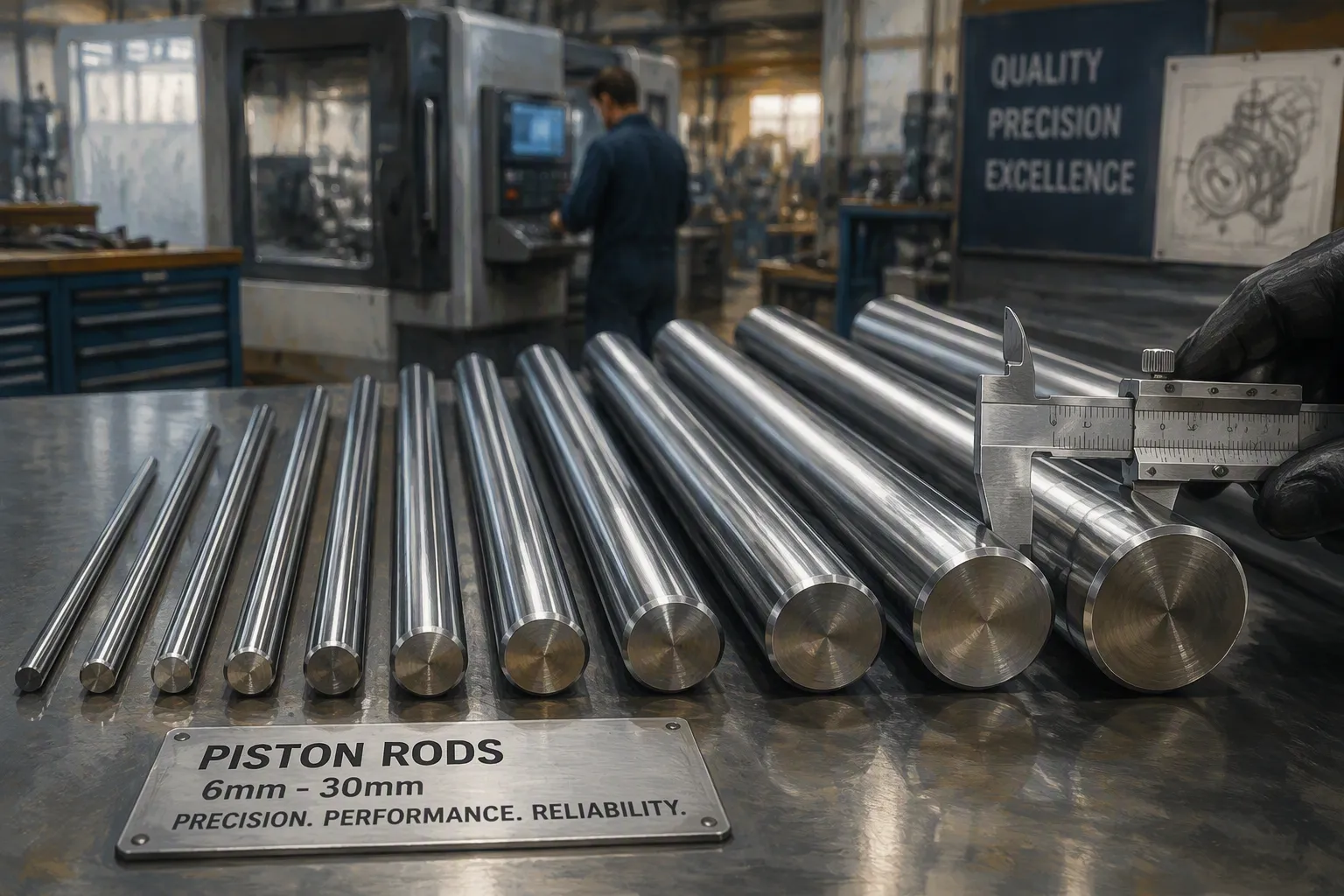
You need a reliable precision gas springs piston rod.HZX has over ten years of experience, specializing in solid rods with diameters ranging from 6mm to 30mm. Why is this range so important? It covers a wide range of applications, from compact medical devices to heavy-duty automotive gas springs. You need components that can easily adapt to different tasks. HZX uses advanced processes. We use QPQ surface treatment and high-strength materials. These methods ensure durability. You will get high-performance rods tailored to your specific needs. Trust HZX to deliver consistent quality.
Key Takeaways
Pick the right material for your gas spring rod. Use C45 or C35 steel for normal tasks. Choose stainless steel 304 for wet places. Select 316 or 316L for tough, salty conditions.
QPQ surface treatment makes rods hard and smooth. It gives a hardness of HRC 40-45 and a roughness of Ra ≤ 0.2μm. This treatment resists corrosion for over 120 hours in salt spray tests.
Careful manufacturing keeps very small differences. The rods meet the ISO h6 standard for their diameter. Straightness and surface finish are checked carefully. This quality stops leaks and wear.
Quality control includes checking dimensions and testing hardness. ISO9001 certification and SGS testing show that the products are reliable. You can trust each batch without extra inspection.
Customization fits your exact needs. Choose lengths up to 1000mm, end fittings, and tolerance grades. This flexibility works for automotive, medical, and factory uses.
Material Options for Gas Spring Rods
High-Strength Steel Grades and Stainless Steel Choices
Your piston rod material determines how well your gas spring performs in its working environment. HZX offers several steel grades, each with distinct strengths. C45 steel provides a tensile strength of 580 MPa, making it a reliable choice for standard industrial applications where cost matters. C35 steel offers similar benefits with slightly different mechanical properties, suitable for lighter-duty uses. Both carbon steel options work well when you apply proper surface treatments.
For demanding environments, stainless steel grades offer superior protection. AISI 304 handles general industrial applications and humid conditions well. AISI 316 contains 2% molybdenum, which gives it superior resistance to crevice, pitting, and stress corrosion cracking compared to 304. AISI 316L, the low-carbon version of 316, offers even better corrosion resistance, especially when welding forms part of your manufacturing process.
Material Grade | Recommended Environment | Key Property |
|---|---|---|
AISI 304 | Indoor machinery, humid environments, general industrial applications | General corrosion resistance, suitable for moderate exposure |
AISI 316 | Marine, coastal, offshore, chloride-rich environments | Contains molybdenum, improved resistance to chloride-related corrosion |
AISI 316L | Marine, pharmaceutical, hygienic, specialist industrial projects | Lower carbon content, preferred for welding and specific corrosion conditions |
Stainless steel 316 contains 2% molybdenum, providing superior resistance to crevice, pitting, and stress corrosion cracking compared to 304.
304 is sensitive to chlorides and acids, making it less suitable for aggressive environments.
For gas spring applications, 316 is recommended for harsh conditions, while 304 is adequate for typical home-garden-kitchen use.
316L is a low-carbon version of 316, enhancing its corrosion resistance.
Selecting certain gas spring materials and geometry ensures the entire assembly performs reliably in the chosen operational environment. For example, a stainless steel rod and cylinder will significantly enhance a gas spring's corrosion resistance.
Surface Treatments for Corrosion and Wear Resistance
Raw steel alone cannot withstand harsh conditions. HZX applies QPQ (Quench-Polish-Quench) surface treatment to every rod. This process achieves a surface hardness of HRC 40-45. The treatment also produces a smooth finish with roughness Ra ≤ 0.2μm. These properties translate to excellent wear resistance and reduced friction during operation.
The QPQ treatment delivers outstanding corrosion protection. Salt spray tests confirm the rods withstand over 120 hours of exposure without failure. This makes them ideal for outdoor applications, automotive components, and marine equipment. You gain a piston rod that maintains its dimensional accuracy and surface quality even after extended service. The combination of proper material selection and QPQ treatment ensures your gas spring delivers consistent performance throughout its lifespan.
Precision Manufacturing Processes
Turning, Grinding, and Polishing for Tight Tolerances
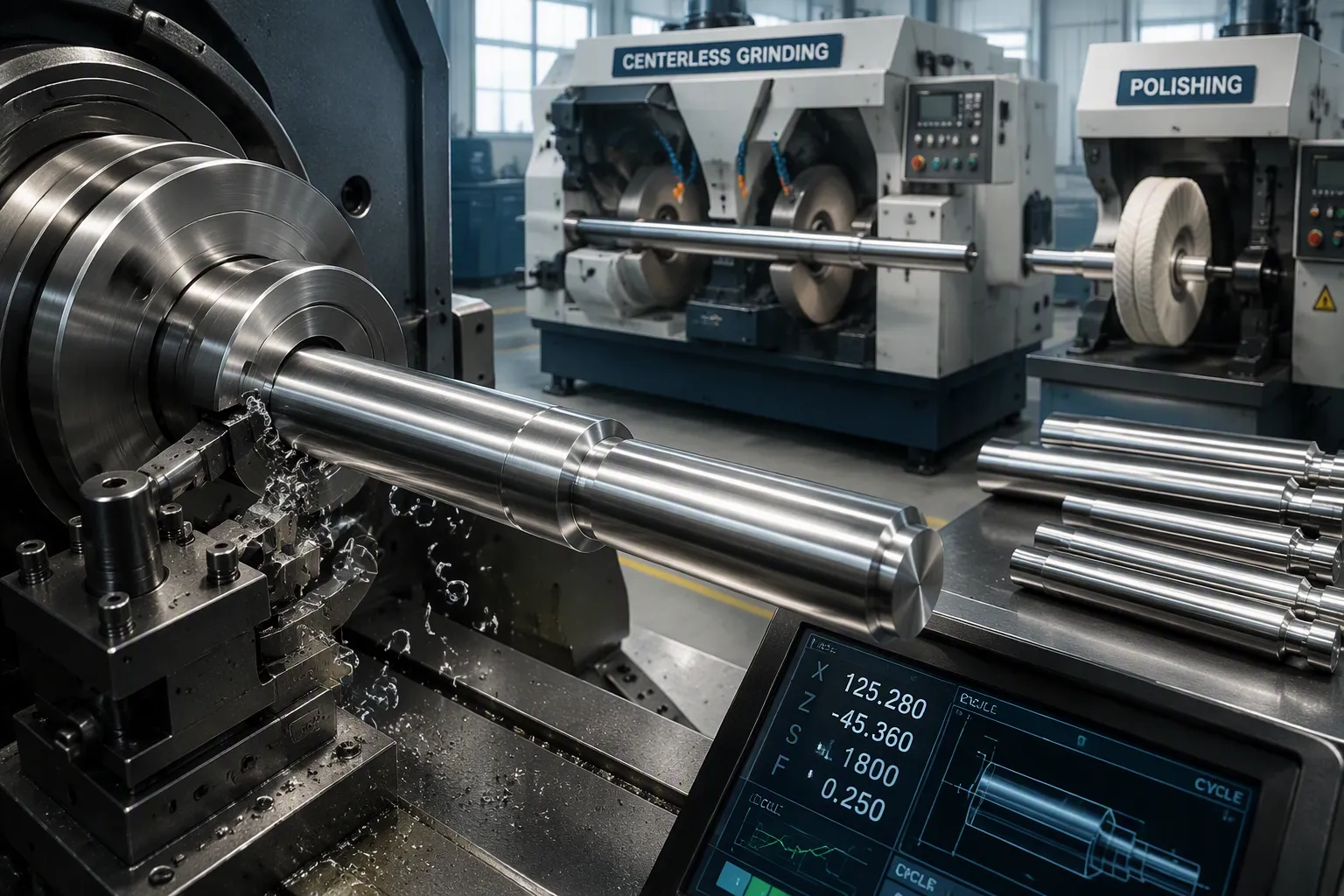
Your piston rod starts as a solid steel bar. To turn it into a finished part, three key machining steps are needed. Each step builds on the last to reach the exact precision your gas spring needs to work reliably.
Precision turning is the first step. A CNC lathe removes extra material to bring the rod close to its final size. This step sets the starting accuracy. The machine holds the rod firmly while cutting tools shape the outside surface. You get steady diameter control from the beginning. For rods from 6mm to 30mm, this first pass must be exact. Any mistake here grows larger in later steps.
Centerless grinding comes next. This step refines the diameter to its final tolerance. The rod moves between two wheels: a grinding wheel and a regulating wheel. This method is great at making round, straight parts with excellent surface quality. It works especially well for long, thin rods where other grinding methods have trouble. The process keeps the same quality along the whole length, even for rods up to 1000mm.
Polishing finishes the process. Fine abrasive compounds smooth the surface to get the needed finish. You need a low roughness value so seals work properly in your gas spring assembly. The QPQ treatment mentioned earlier works best on a well-polished base surface. Polishing also removes tiny flaws that could become weak points during use.
The diameter tolerance you can expect follows the ISO h6 grade. This standard makes sure your rod fits correctly with parts like seals and guides.
Rod Diameter (mm) | Tolerance (h6) |
|---|---|
6 | -0.009/-0.020 |
8 | -0.010/-0.022 |
10 | -0.010/-0.022 |
12 | -0.012/-0.025 |
16 | -0.012/-0.025 |
20 | -0.015/-0.028 |
25 | -0.015/-0.028 |
These tight tolerances keep your rod at the right clearance inside the cylinder. Too loose, and you get leaks. Too tight, and you create too much friction. The h6 grade finds the right balance for most gas spring uses.
Ensuring Straightness and Surface Finish Consistency
Straightness matters just as much as diameter accuracy. A bent rod causes uneven wear, seal damage, and early failure. HZX uses strict straightness checks throughout production. You get rods that run true along their full length.
Several ways exist to measure straightness. Each one serves a different purpose in quality control.
Method | Type | Procedure |
|---|---|---|
Gap test | Quantitative | Roll the part on a flat surface and measure the largest gap between the part and the surface using a pin gauge, micrometer, or linear scale. |
Total Indicator Reading (TIR) test | Quantitative | Place the material between v-blocks, rotate it one revolution, and use an indicator to record maximum and minimum readings to calculate TIR. |
Qualitative pass/fail tests | Qualitative | Use simple go/no-go methods to determine if the part meets straightness requirements without producing a numerical value. |
Modern facilities also use optical measurement systems. These systems use high-definition scanning cameras with pixel sizes of 4.65 μm × 4.65 μm. The rod moves along a precision-guided path at a controlled speed of 0.2 m/s. The camera captures edge points at regular intervals. Advanced statistical analysis filters out noise using a 95% confidence interval based on the t-distribution. This method achieves higher accuracy than older ways.
Surface finish consistency follows similar strict standards. You need a surface roughness of Ra ≤ 0.2μm for the best seal contact. The polishing step achieves this consistently across the full diameter range. Regular sampling makes sure every batch meets the spec. This consistency leads directly to predictable performance in your final product.
The mix of tight tolerances, verified straightness, and consistent surface finish means your gas spring works smoothly from the first cycle. You avoid common problems like sticking, leaking, or early wear. HZX keeps these standards across all production volumes, so you get the same quality whether you order one hundred or one million rods.
Quality Control and Certifications
Dimensional Checks and Hardness Testing Protocols
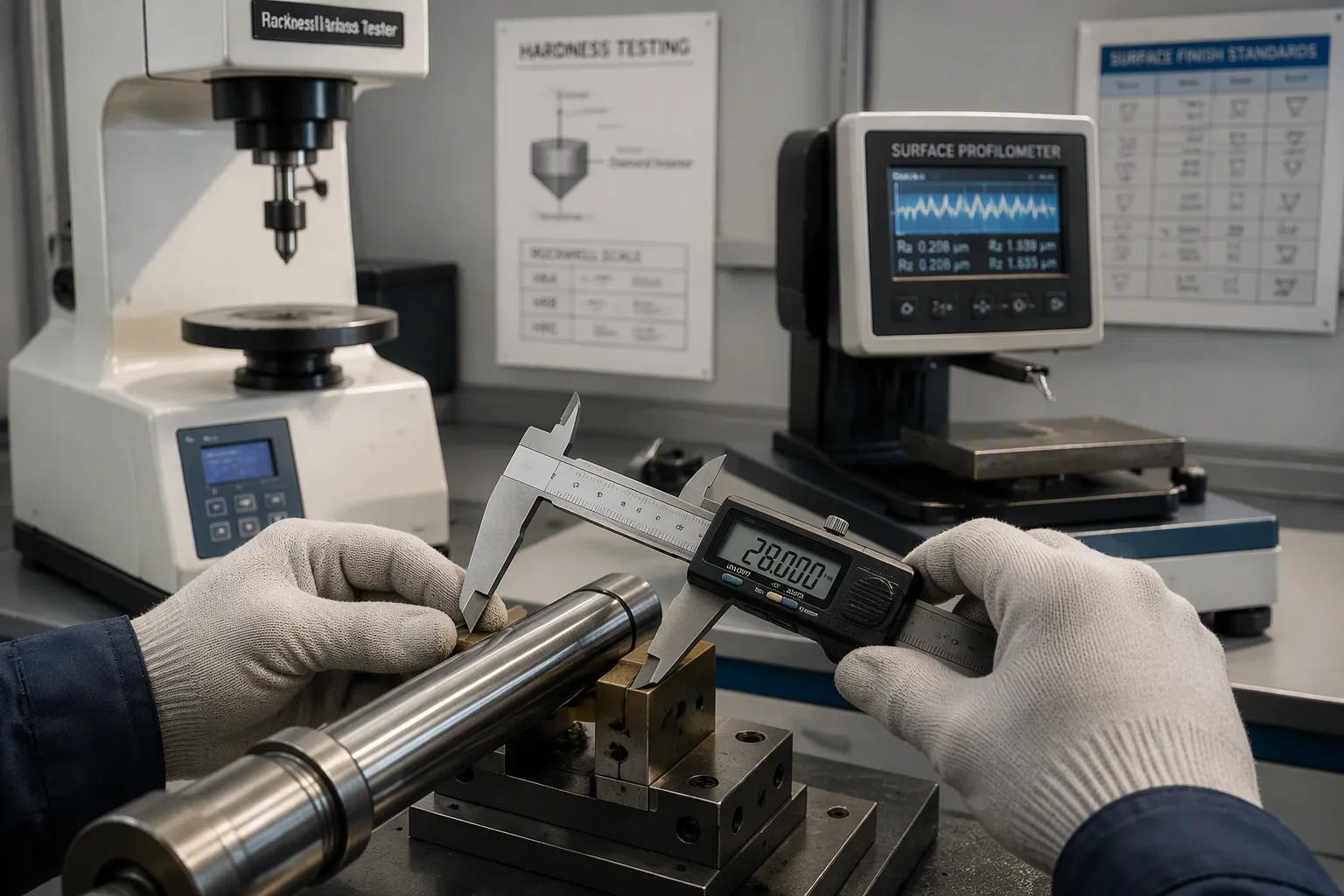
You need to be sure every piston rod meets its specs. HZX uses a multi-step inspection process to check each rod. Dimensional checks confirm the diameter, length, and straightness match what you need. Hardness testing ensures the material and surface treatment provide the expected durability.
The inspection starts with dimensional measurement. You can trust several precision tools to verify rod specs. The Sunnen AG-300 Precision Gauge measures bearing housing and pin bores for size and out-of-round. This tool gives you accurate readings of the key dimensions. A Dial Bore Gauge works as an alternative to the AG-300 for measuring bearing housing and pin bores. Both tools offer the precision needed to confirm the rod meets its h6 tolerance grade. A Vernier Caliper measures the center-to-center distance between bores, ensuring the rod fits correctly in your assembly.
Surface roughness testing comes after the dimensional checks. The target roughness of Ra ≤ 0.2μm must hold true across the entire rod surface. Operators use profilometers to measure the surface profile at multiple points. This step catches any polishing defects before the rod moves to the next stage. A consistent surface finish means your seals last longer and your gas spring performs smoothly.
Hardness verification confirms the QPQ treatment achieved the required result. The surface hardness of HRC 40-45 must be consistent across every rod. Operators use Rockwell hardness testers to check the surface. They test multiple spots on each rod to ensure uniformity. This step protects you from receiving rods that might wear out early or fail under load.
The Rod Alignment Machine plays a key role in straightness verification. This equipment measures rod twist, bend, and center-to-center distances. A rod that passes this test will run true in your gas spring assembly. You avoid problems like uneven wear, seal damage, and shorter service life.
Industry Standards and Third-Party Verification
Quality management systems provide the framework for consistent production. HZX holds ISO9001 certification, which directly confirms a formal quality management system standard. This certification means you can trust the processes behind every rod. The factory follows documented procedures for every step, from raw material inspection to final packaging.
Third-party testing adds another layer of assurance. SGS testing and certification supports the quality claims HZX makes. An independent laboratory verifies the dimensional accuracy, surface finish, and corrosion resistance of the rods. This external validation gives you peace of mind that the product meets your expectations.
The table below shows the key certifications and their relevance to quality management.
Certification | Relevance to Quality Management |
|---|---|
ISO9001 | Directly confirms a formal quality management system standard. |
SGS | Indicates third-party testing and certification, supporting quality assurance claims. |
These certifications mean you do not need to perform your own incoming inspection on every batch. You can rely on the documented quality system and third-party verification. This saves you time and reduces your costs while maintaining confidence in the product.
Regular audits ensure the quality system stays effective. Internal auditors review process compliance. External auditors from the certification body verify the system meets ISO9001 requirements. This cycle of continuous improvement means the factory keeps getting better at delivering consistent quality.
You receive rods that meet the specifications you ordered. The combination of dimensional checks, hardness testing, surface roughness verification, and third-party certification creates a complete quality assurance system. Your gas spring assembly benefits from components that fit correctly, seal properly, and perform reliably over their intended lifespan.
Customization for Gas Spring Applications
Tailoring Length, End Fittings, and Tolerance Grades
Standard rods work for many jobs, but your project often needs something special. HZX offers OEM and ODM services that let you choose exactly what you want. You pick the length, the end fittings, and the tolerance grade. This flexibility means you get a part that fits your design perfectly, not a close match.
Diameter and material choices give you the first way to customize. Standard diameters range from 6 mm for light jobs to 14 mm for heavy-duty uses. Bigger diameters resist bending better under side loads. You can choose based on your mounting angle and side load needs. For materials, you have several options. Carbon steel with chrome plating works well in controlled spaces. Stainless steel grades 304 or 316 resist corrosion in harsh conditions. Titanium offers extreme weight savings at 40% lighter with better corrosion resistance, though it costs more.
Surface finishes add another layer of customization. You can pick black chrome, satin nickel, or brushed finishes for looks. Powder coating comes in custom colors, but it needs minimum orders of 100–200 units. For automotive under-hood use, zinc-nickel plating gives strong protection against heat and chemicals.
End fittings and tolerances finish the setup. You can choose threaded ends, grooved profiles, or custom shapes that match your assembly. Tighter tolerance grades than the standard h6 are available when your design needs them. You also control the rod length up to 1000mm. This level of control ensures your gas spring assembly works exactly as you planned.
Typical Use Cases in Automotive, Medical, and Industrial Sectors
Automotive uses show the value of customization. Car trunk and hood supports rely on gas springs for one-hand operation. The piston rod provides controlled lifting force that helps users open and hold the trunk lid without manual support. You need the right force rating and stroke length for each vehicle model. A rod that works for a compact sedan may not suit an SUV with a heavier tailgate.
Medical beds demand even stricter specs. The piston rod must install pointing downward in the static closed position. This orientation keeps internal seals and pistons lubricated, preventing dry friction and early failure. Your force rating must match the bed section weight and pivot points exactly. An incorrect calculation can damage equipment or stop the bed from closing. Surface quality matters greatly. Micro-scratches or dents will quickly ruin internal seals. Medical settings also expose rods to moisture, spraying water, and harsh cleaning agents like bleach. Stainless steel bodies in 304 or 316 prevent corrosion from these chemicals. The rod must also support locking mechanisms that hold loads at specific positions, such as a 15° tilt angle, releasing at the push of a button.
Industrial and other sectors show the full range of uses. Office chairs, bicycle suspensions, and industrial dampers all benefit from the 6mm to 30mm range. Furniture, motorcycle, and home appliance applications also rely on these parts. Each sector brings unique needs, and customization lets you meet them all.
HZX focuses on the important 6mm to 30mm diameter range. This range works for many uses, from small medical tools to heavy car gas springs. Advanced materials like C45, C35, and stainless steel, along with QPQ treatment, make high-performance piston rods. You get steady quality from ISO9001-certified processes. The factory makes 50 million rods each year, ensuring a reliable supply for your large projects. Optimized manufacturing keeps costs low while maintaining precision and performance. Look at your specific application needs. HZX's customization lets you choose exact lengths, end fittings, and tolerance grades. Contact us today for a quote, sample, or technical help. Talk about your needs with our team.
FAQ
What is the QPQ treatment and why does it matter?
The QPQ treatment makes your rod's surface very hard, reaching HRC 40-45. It also gives the rod a smooth finish with roughness Ra ≤ 0.2μm. This helps protect the rod from rust and damage. Salt spray tests show it can resist corrosion for over 120 hours.
What diameter range do you offer?
You can get solid piston rods with diameters from 6mm to 30mm. This size range fits many different uses. Smaller rods work well for medical devices. Bigger rods handle heavy automotive gas springs.
How do I choose the right material for my gas spring?
Pick C45 or C35 steel for regular jobs. Choose stainless steel 304 for damp or wet places. Select 316 or 316L for marine or chemical areas. Each material gives you different levels of rust protection.
Can I get custom lengths or end fittings?
Yes, you can. HZX provides OEM and ODM services. You tell us the exact length you need, up to 1000mm. You pick end fittings like threaded or grooved styles. You also choose the tolerance grade.
What certifications does your factory hold?
Our factory has ISO9001 certification for quality management. Third-party SGS testing also checks our rods. These certifications prove we deliver steady quality in every batch you order.
Recommended Products

Chrome Plated Piston rod for chair gas spring

Custom 45 steel Piston rod for automobile supporting gas spring

QPQ hollow piston rod for Gas Spring | 6mm Chrome Plated Bar

High quality hard chrome plated piston rod for gas spring,damper

QPQ hollow piston rod for Gas Spring support rods used in furniture Parts

φ10mm Chrome plated piston rod for Gas Spring

Hard Chrome hydraulic rod for medical bed gas spring

High Quality Hollow Hydraulic Rod For Gas Spring

QPQ (Quench-Polish-Quench) Nitrided Piston Rod for Gas Spring

Hard Chrome Plated Piston Rod for Gas Spring


Recent News
1.Gas Spring Rods in Bicycles: Enhancing Performance and Comfort
2025-04-292.A Deep Dive into the Chrome Piston Rod for Gas Springs
2025-09-103.The 4 Main Parts of a Gas Spring
2025-11-194.Guide to Gas Spring Piston Rods: Design, Types, and Supplier Selection
2026-02-095.Professional Automotive Gas Spring Piston Rod Supplier: Infusing Reliability into Your Supply Chain
2026-02-286.Top 10 Gas Spring Accessories Suppliers in the World for 2026
2026-04-287.Wholesale solid Piston Rod for Gas Struts
2026-07-028.Bulk Order Solid Piston Rods for Furniture Gas Springs
2026-07-209.Custom Solid Piston Rods for Gas Springs – OEM Factory with ISO 9001 ; SGS Certification
2026-08-0510.Precision Solid Gas Spring Piston Rod Factory for Diameter 6mm to 30mm
2026-08-31


