
 Product Search


How to Choose Piston Rods for Gas Spring Manufacturing
 Nov 20, 2026|
 View:8
Choosing the wrong gas spring rod is a common cause of leakage, noisy travel, and premature failure in gas springs and dampers. For a manufacturer assembling gas springs at volume, the rod is the moving interface that a seal slides against on every stroke, so small differences in surface finish, hardness, and diameter tolerance show up quickly as field complaints. This guide explains which specifications actually matter, how material and surface treatment change performance, and how to shortlist suppliers without getting lost in catalog language.
We cover the specification ranges used in typical gas spring production, a comparison of carbon steel and stainless options, the role of QPQ treatment and chrome plating, and the size boundaries that determine whether a supplier can physically make your part. The aim is to give engineers and purchasing teams a practical checklist they can apply to the next inquiry.
Key Takeaways
Surface roughness, hardness, and diameter tolerance matter more to a gas spring rod than appearance alone.
Choose material by corrosion exposure and load, then match the surface treatment to the operating environment.
A QPQ layer improves wear and corrosion resistance; chrome plating adds a different kind of surface finish.
Confirm diameter and length limits early, since many factories cannot produce oversized or extra long rods.
Ask any piston rod manufacturer for test data, not adjectives, before placing a volume order.
What a Gas Spring Rod Does Inside the Assembly
The rod is the sealing interface
A gas spring is a sealed cylinder filled with nitrogen gas and a controlled amount of oil. The gas spring rod passes through a guide and seal at one end of the cylinder. Every time the rod extends or compresses, that seal wipes across the rod surface. If the surface is too rough, the seal wears and gas escapes. If it is too soft, scoring and dents create leak paths. This is why a gas spring piston rod is specified by surface and mechanical properties, not just by diameter.
Why the specification is tighter than a general shaft
A general purpose shaft may be judged mainly on strength and straightness. A rod used in a gas spring also has to slide smoothly against a rubber or polymer seal for thousands of cycles while holding gas pressure. The combination of low friction, consistent diameter, and corrosion resistance is what separates a suitable gas spring rod from an ordinary machined bar.
| Property | Why it matters |
|---|---|
| Surface roughness | Lower roughness reduces seal wear and static friction, giving smoother extension and retraction. |
| Surface hardness | A harder surface resists scoring from dust and side loads, extending seal life. |
| Diameter tolerance | Consistent diameter keeps seal compression stable from the first rod to the last in a batch. |
| Straightness | Bent rods bind in the guide and cause uneven seal loading and noisy travel. |
| Corrosion resistance | Rust on a stored or outdoor rod destroys the seal and can seize the assembly. |
Core Specifications of a Gas Spring Rod
Typical parameter ranges
The figures below reflect the production range of an established gas spring rod manufacturer working with carbon and stainless steels. Treat them as a reference for conversation, and always confirm the exact value against a drawing or test report.
| Parameter | Typical value | Note |
|---|---|---|
| Diameter range | 6 mm to 30 mm | Common gas spring sizes cluster in the smaller half of this range. |
| Maximum length | 1000 mm | Longer parts exceed the capacity of many production lines. |
| Surface hardness | HRC 40 to 45 | Measured at the treated surface layer. |
| Surface roughness | Ra at or below 0.2 micrometres | Smooth enough for repeated seal travel. |
| Salt spray result | 120 hours or more | Tested under a recognised salt spray test method for coated metals. |
| Quality system | ISO 9001 | Aligns with international quality management requirements. |
How to read these numbers
A hardness figure without a test method is difficult to compare, so ask whether the value refers to the surface layer or the core. A salt spray result is a comparative laboratory measure and does not predict an exact service life in a specific climate. Roughness should be measured along the sliding direction, because that is the direction the seal travels. When a supplier can explain how each number is measured, the data is far more useful than a catalogue claim.
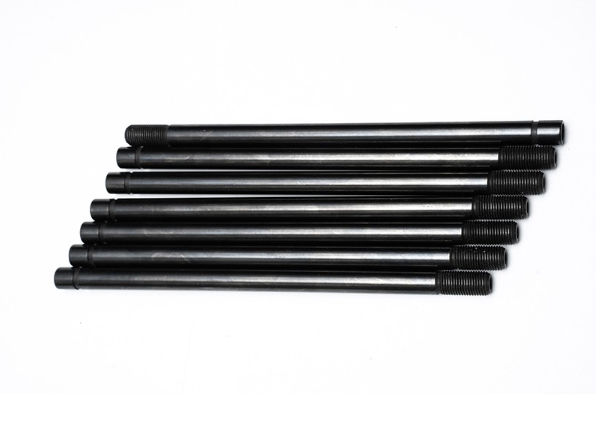
Material Choices for Gas Spring Rods
Carbon steel grades
C45 and C35 carbon steels are widely used for a gas spring rod because they respond well to heat treatment and surface hardening, and they keep cost reasonable at volume. They are a practical choice for indoor furniture, automotive interiors, and machinery where the rod is protected from direct moisture.
Stainless steel grades
Grades such as 304, 316, and 316L are selected when the assembly faces humidity, cleaning agents, marine air, or outdoor exposure. The trade off is higher material cost and different machining behaviour. For a chrome plated rod over stainless, confirm that the plating process is compatible with the base grade.
| Option | Typical application | Limitation |
|---|---|---|
| C45 carbon steel | High volume indoor gas springs and dampers | Needs a protective surface layer in humid environments. |
| C35 carbon steel | General purpose rods with moderate strength needs | Similar corrosion considerations to C45. |
| 304 stainless | Furniture and indoor fixtures with moisture exposure | Lower strength than hardened carbon steel. |
| 316 and 316L stainless | Coastal, marine, and chemical exposure | Highest material cost of the group. |
Surface Treatment: QPQ and Chrome Plating Compared
What QPQ does to the surface
QPQ stands for quench, polish, quench, a salt bath nitriding process that forms a hard compound layer on the steel surface. For a gas spring rod, the benefit is a combination of wear resistance and corrosion resistance that comes from the base material surface itself rather than from a separate coating that can chip.
Where chrome plating fits
A chrome plated piston rod provides a smooth, bright surface with established performance in sliding seal applications. It remains a common choice for furniture and automotive gas springs. The decision between the two treatments usually comes down to the operating environment, the seal material, and the production budget.
| Feature | QPQ treated rod | Chrome plated rod |
|---|---|---|
| Wear resistance | Hard compound layer formed in the surface | Hard plated layer over the base steel |
| Corrosion behaviour | Resistant through the treated layer | Dependent on plating thickness and integrity |
| Surface finish | Dark, uniform finish | Bright metallic finish |
| Typical use | Dampers, outdoor and industrial assemblies | Furniture, office chair, automotive gas springs |
Need a gas spring rod matched to your seal and stroke?
Share your drawing, diameter, and operating environment to receive a specification review and a quotation.
Send an InquiryView ProductsMatching the Rod to the Gas Spring Application
From office chairs to automotive tailgates
An office chair cylinder prioritises smooth height adjustment and a clean surface. An automotive tailgate gas spring adds outdoor exposure and repeated use. A damper used in industrial equipment may see higher side loads and contamination. Each case shifts the emphasis between material, treatment, and tolerance.
| Application | Priority | Suggested focus |
|---|---|---|
| Office chair gas spring | Smooth travel and appearance | Chrome plated carbon steel with fine roughness. |
| Automotive trunk and bonnet | Corrosion and consistency | Treated surface with tight diameter control. |
| Industrial damper | Wear and side load resistance | QPQ treated carbon steel with verified hardness. |
| Outdoor or marine assembly | Corrosion resistance | Stainless base grade with a compatible finish. |
Size Boundaries Before You Send an Inquiry
Confirm what the factory can actually produce
Many inquiries fail because the requested rod is larger than the supplier can make. A factory may quote a diameter range in a catalogue while lacking the equipment for extra long or oversized parts. Before investing in drawings, confirm the real limits: diameter from 6 mm to 30 mm and length up to 1000 mm for a typical production line. If your design calls for a longer or thicker rod, discuss it at the concept stage rather than after tooling.
Why this matters to both sides
Clear boundaries save engineering time. A buyer who states the required diameter, length, and tolerance up front receives a faster answer, and a supplier who states its limits honestly avoids quoting a part it cannot deliver. This is the practical value of working with a gas spring rod manufacturer that publishes its production range.
How to Evaluate a Gas Spring Rod Manufacturer
Questions worth asking
Start with the production range, then ask for a typical test report covering hardness, roughness, and salt spray exposure. Confirm whether inspection happens on every batch, and request the material grade used for each quoted part. A supplier able to answer these questions with documents is easier to qualify than one that relies on general descriptions.
From sample to volume order
A sensible qualification path is sample review, a small trial batch, then volume release. During the trial, measure diameter at several points, cycle the rod in the actual seal, and inspect the surface after exposure testing. This turns a purchasing decision into a verified result.

Chrome Plated Piston Rod for Chair Gas Spring
Diameter 6 to 30 mm, length up to 1000 mm, surface roughness at or below 0.2 micrometres, for furniture gas springs.
View Product
Hard Chrome Gas Spring Rod
C45 and C35 carbon steel or stainless grades, QPQ treatment, surface hardness HRC 40 to 45, for dampers and tailgates.
View ProductConclusion
Selecting a gas spring rod comes down to a short list of verifiable facts: surface finish, hardness, material, treatment, and the diameter and length the factory can truly produce. Once those are fixed, a supplier either has the data and equipment or does not. If you are looking for a reliable gas spring rod manufacturer, choose Hengzhixin, a producer established in 2012 with a 5000 square metre facility, more than 60 staff, and an annual output above 50 million rods supplied to markets in Europe and the Middle East.
Figures above are typical industry ranges compiled from public sources and may vary by model and production method. Confirm final values against a current drawing and test report.
Ready to specify the rod for your next gas spring program?
Send your drawing and annual volume to receive a quotation and a recommended specification.
Get a QuoteView ProductsFAQ
What diameter and length can a standard gas spring rod cover?
A typical production range is 6 mm to 30 mm in diameter and up to 1000 mm in length. Confirm both limits before finalising a drawing, because oversized or extra long parts often fall outside a factory's equipment.
Is a QPQ treated gas spring rod better than a chrome plated one?
They solve different problems. QPQ forms a hard wear resistant layer in the surface, while chrome plating gives a smooth bright finish suited to sliding seals. The right choice depends on load, environment, and seal material.
Why does surface roughness matter so much in a gas spring rod?
The seal slides along the rod on every stroke. A smoother surface with roughness at or below 0.2 micrometres reduces seal wear and friction, which helps prevent gas leakage and noisy operation.
Can stainless steel be used for a gas spring piston rod?
Yes. Grades such as 304, 316, and 316L are used where corrosion exposure is high, including coastal and outdoor applications. Confirm that the chosen surface treatment is compatible with the stainless grade.
What documents should I request from a piston rod manufacturer?
Ask for a recent test report covering surface hardness, roughness, and salt spray exposure, plus the material certificate for the quoted grade. Suppliers working to a recognised quality system can usually provide these without delay.


