
 Product Search


Searching For 6-30mm Solid Gas Spring Piston Rod? Direct Factory Here
 Oct 14, 2026|
 View:24
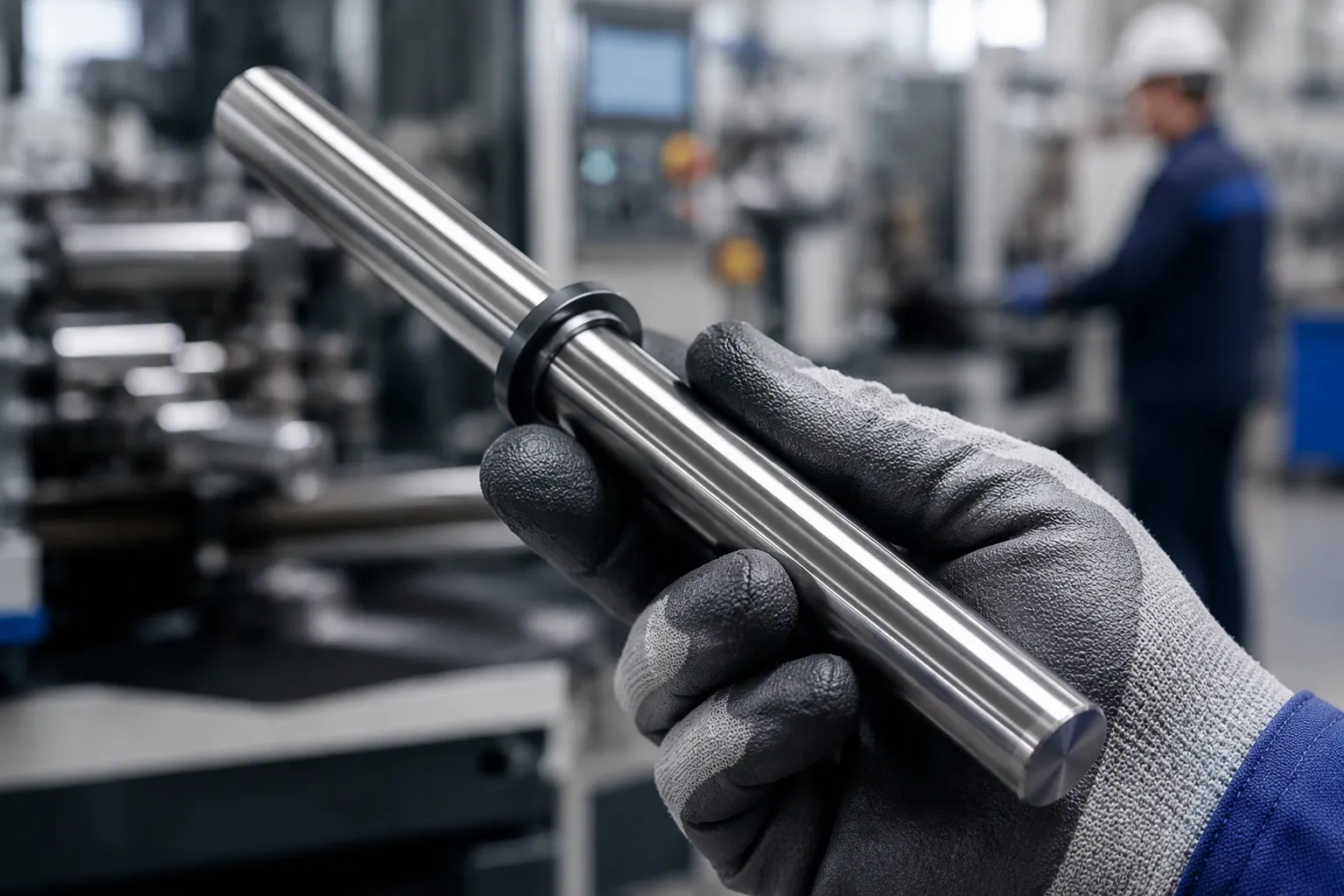
A 6-30mm solid gas spring piston rod is a precise steel shaft. It moves inside a sealed cylinder filled with pressurized nitrogen gas and oil. Gas springs store energy this way, and the rod carries that force. These gas springs soften motion as they extend. The 6-30mm range fits gas springs in light furniture struts and heavy automotive or industrial units. Automotive, furniture, medical, and industrial buyers purchase this size most often. Strategic Market Research values the global gas springs market at USD 3.7 billion in 2024, and demand for gas springs stays steady. This article explains how a direct factory makes the part and why buying straight from the production line offers real advantages.
Key Takeaways
A 6-30mm solid gas spring piston rod is a strong steel shaft. It moves inside a gas spring to carry force.
Factories make these rods from carbon or stainless steel. They use QPQ treatment to make them hard and resistant to rust.
Buying straight from the factory gives you clear prices, fast quotes, and engineer help for custom orders.
Getting the right rod means you need exact measurements of length, diameter, and fittings. This helps you avoid parts that don't match.
You can get custom rods from Ø6mm to Ø30mm, and lengths up to 1000mm. Standard items take 1-2 weeks to arrive.
What Is a 6-30mm Solid Gas Spring Piston Rod?
Definition and Size Range
A 6-30mm solid gas spring piston rod is a solid steel part shaped like a cylinder. It sits partly inside the gas spring body and connects to the piston. Gas springs store potential energy by squeezing pressurized nitrogen gas inside a sealed cylinder. The rod moves that stored force to the outside load.
Factories make this piston rod in diameters from Ø6mm to Ø30mm and lengths up to 1000mm. A 6mm rod paired with a 15mm cylinder, such as the YQ6-15 type, is common for heavy loading capacity. Buyers who pick gas springs for a new design often start with the shaft diameter, then work outward to the other dimensions.
Rod diameter drives performance directly. The table below shows the general relationship.
Rod Diameter | Load Capacity | Stability |
|---|---|---|
6 mm | Light duty | Moderate |
8 mm | Medium duty | Good |
10 mm | Heavy duty | High |
Larger rod diameters match higher load capacity and greater stability.
Piston rod diameter affects force capacity and displaced volume; a larger rod adds to the effective area and changes the force progression.
Solid Construction and Applications
Solid rods differ from hollow rods in one clear way. The solid core carries compressive and bending loads without collapsing. Engineers choose solid construction when strength and load-bearing matter more than weight savings. Common materials include carbon steel and stainless steel, both supplied as precision-ground, polished stock. Carbon steel rods often receive chrome-plating, salt-bath nitriding, or Nitrotec surface treatment to improve wear and corrosion resistance.
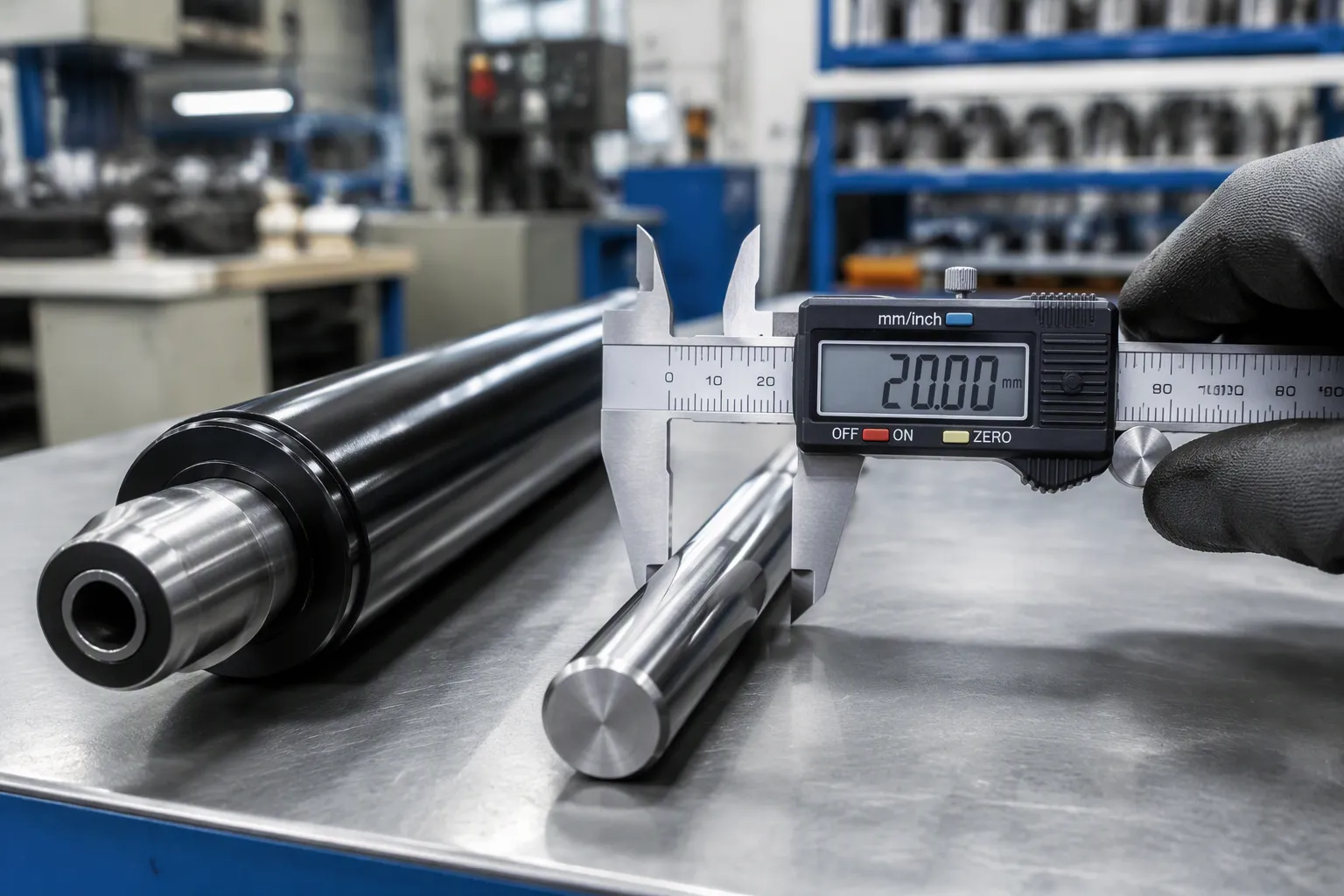
These rods serve many products. Car trunks and hoods rely on gas struts for lift assist. Dampers, hardware toolboxes, medical beds, office chairs, and study tables all use gas springs with solid rods. A buyer planning a gas strut replacement should record several measurements before ordering: extended length, compressed length, stroke length, cylinder diameter, shaft diameter, and the type of end fittings. A digital caliper gives an accurate measurement of each value. Correct specifications prevent a mismatch, and a wrong specification wastes both time and money.
Buyers who compare gas struts across suppliers soon notice that the force rating changes with rod size. A higher rating suits a heavier lid or a stiffer chair mechanism. The same logic applies to every gas strut in a catalog. Matching the rating to the real load keeps the part working for years.
How a Direct Factory Makes It
From Raw Material to Finished Rod
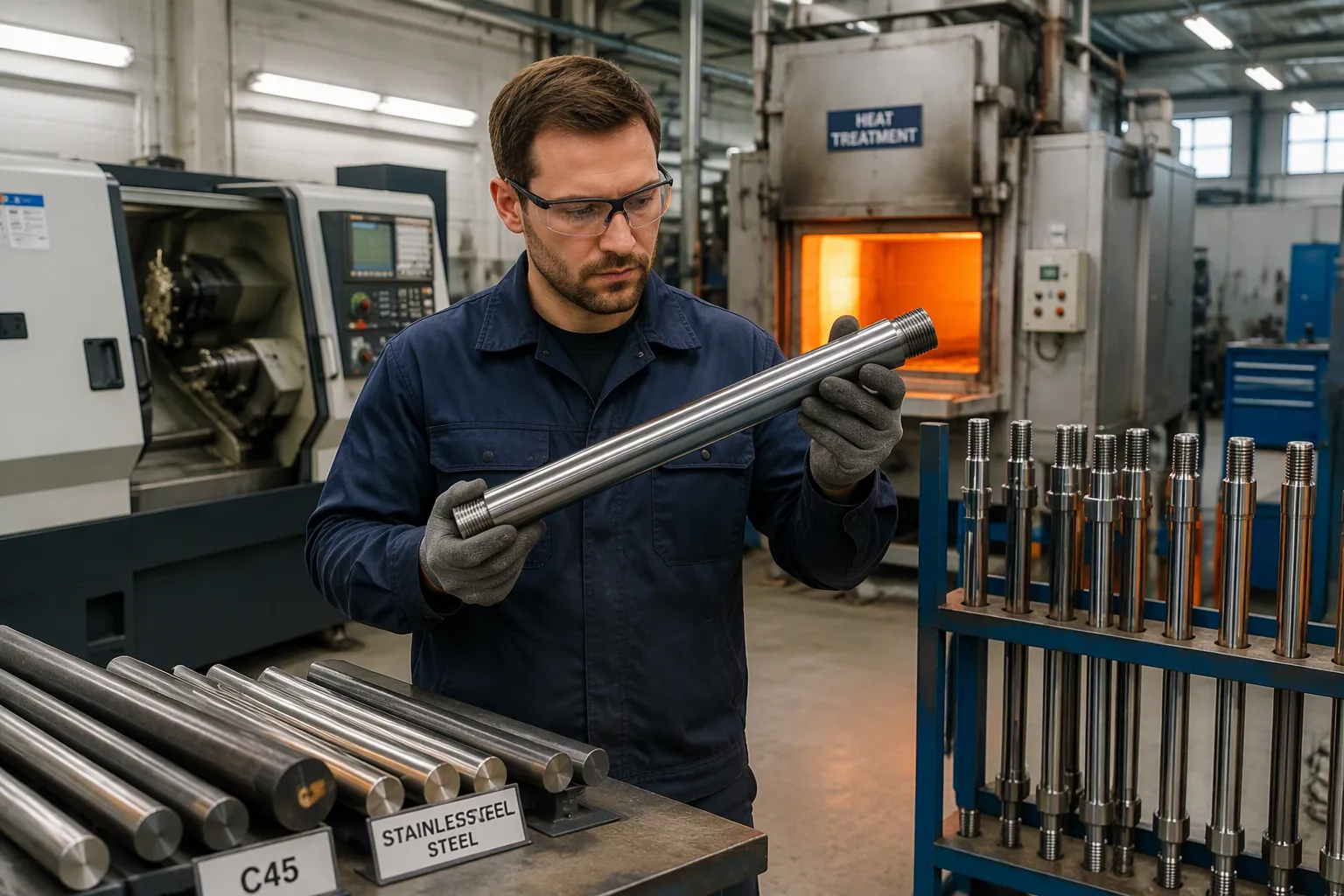
Production begins with choosing the material. C45 steel has about 0.42–0.50% carbon. After quenching and tempering, it gives toughness, flexibility, high strength, and good machinability. These traits fit strong moving parts like connecting rods and shafts, and they match what a gas spring piston rod needs. Factories also use C35 and 304/316/316L stainless steel. Stainless grades work well for wet or outdoor gas springs. A buyer who checks the working environment can pick the right grade for gas springs.
The line then follows a set order:
Cut the steel bar to length.
Machine the rod to its shaft diameter and cut threads on the ends.
Heat treat the part, then apply QPQ (Quench-Polish-Quench) treatment.
Grind and polish the surface.
Inspect every part.
Put the rod together with the piston.
QPQ runs in three steps. Salt bath nitriding at about 570–590°C forms a hard compound layer with a diffusion zone beneath it. Polishing removes oxides and makes the surface smoother. Post-oxidation at about 400–450°C creates a dense black Fe₃O₄ layer. The compound layer reaches 900–1200 HV. Treated parts get surface hardness of HRC 40-45 and roughness of Ra ≤ 0.2μm. They pass a 120+ hour salt spray test. QPQ also resists wear much better than hard chrome plating and raises fatigue strength by more than 40% on medium carbon steel. These properties keep gas springs smooth through long service.
Quality Control and Customization
Quality checks happen at each stage. Inspectors check parts after induction hardening, after friction welding, and after threading and polishing. Each check catches defects early and confirms the parts meet design specs. A final station adds a manual surface inspection by an experienced inspector. That person looks for scratches, material defects, and handling defects. Results send each part to packaging, rework, or scrap.
HZX, run by Changzhou Hengzhixin Machinery Co., Ltd., follows this system under ISO9001 certification with SGS test reports. Advanced automatic production lines support a strict inspection system. The 5,000-square-meter factory has over 60 workers and makes 50 million units a year, exporting to Europe and the Middle East. Its gas springs reach buyers in both regions.
Customization covers OEM and ODM work. Engineers build samples from customer drawings. Orders ship with test reports. Buyers sourcing gas struts for a new lid or chair confirm extended length, compressed length, stroke length, cylinder diameter, shaft diameter, and end fittings before release. A digital caliper settles each measurement. Clear specs and a matched force rating keep gas springs working through thousands of cycles.
A rod order for gas springs starts with a measurement sheet. Buyers list extended length, compressed length, stroke length, and cylinder diameter. They record shaft diameter and end fittings too. Each measurement feeds the spec, and the spec sets the force rating. Two gas struts from the same drawing share one rating. Buyers who compare gas springs by measurements avoid mismatches. A second measurement after assembly confirms the rating. Engineers check the force rating against the load and the shaft diameter against the cylinder bore. They flag any mismatch early. This review protects gas springs, gas struts, and every gas strut in a catalog from field failure.
Why Buy a 6-30mm Solid Gas Spring Piston Rod From a Direct Factory?
Cost, Lead Time, and Support
A direct factory sells the 6-30mm solid gas spring piston rod without middleman markups. Buyers who want clear pricing see material and processing cost on one quote. Gas springs for car trunks, office chairs, and medical beds follow the same quoting path. Distributors still handle small mixed orders well, where one shipment carries many product lines and several gas struts.
Lead time depends on the order type.
Order Type | Typical Lead Time |
|---|---|
Standard products from inventory | 1–2 weeks |
Custom specifications | 4–8 weeks |
High-volume custom production orders | 2–4 weeks |
Talking straight to the production line speeds up quoting. Engineers review drawings and confirm shaft diameter and force rating before sample approval. The factory arranges shipping support for export orders.
Before release, buyers record measurements for each gas spring. A digital caliper settles extended length, compressed length, stroke length, cylinder diameter, shaft diameter, and end fittings. These measurements feed the technical specifications. A second measurement after assembly confirms the force rating. Buyers who compare gas struts by measurements avoid mismatches, and a matched rating keeps gas springs working through thousands of cycles.
Quality and Customization Control
In-house production keeps every step under one roof. CNC turning holds diameter control at IT6–IT7. Precision cylindrical grinding after plating restores final accuracy. Thread machining includes concentricity verification. Each rod passes inspection for roughness, hardness, straightness, and dimensional accuracy, and batch reports document the results.
Manufacturers with fully integrated production systems are typically better positioned to maintain stable quality and delivery performance. Integrated processing improves traceability, reduces outsourcing risks, and helps maintain consistent dimensional accuracy throughout large-scale production.
Customization covers OEM and ODM work. Buyers set shaft diameter from Ø6mm to Ø30mm, length up to 1000mm, and material grade. A custom specification lists extended length, compressed length, cylinder diameter, and shaft diameter. Engineers check each specification against the force rating. Gas springs for toolboxes, dampers, and study tables follow the same path. ISO9001 certification and SGS test reports travel with the order.
A 6-30mm solid gas spring piston rod is a solid steel shaft inside a sealed cylinder. Gas springs lift trunks, chairs, beds, and toolboxes; gas struts serve vehicles. Factories machine the rod from C45 or stainless steel, apply QPQ, and verify HRC 40-45, Ra ≤ 0.2μm, a 120+ hour salt spray test, and inspection. Direct sourcing brings clear pricing, fast quotes, engineer support, and custom specifications. Buyers take measurements for gas springs, and each measurement sets specifications. Gas struts need measurements. Gas springs need measurement. Gas struts and gas springs share measurements. Gas struts reward measurement. Gas springs reward measurement. Repeat measurements. Gas struts and gas springs both reward measurements and measurement.
FAQ
What sizes does a direct factory offer for this rod?
HZX makes solid rods from Ø6mm to Ø30mm, with lengths up to 1000mm. Buyers pick the diameter to match the load and stability they need. A 6mm rod with a 15mm cylinder works well for heavy loading capacity. Engineers check each specification against the application before production starts.
Which materials and finishes suit different working conditions?
C45 and C35 carbon steel work for most gas springs. Stainless grades 304, 316, and 316L are good for wet or outdoor gas struts. Every rod gets QPQ treatment. That process gives HRC 40-45 hardness, Ra ≤ 0.2μm roughness, and a 120+ hour salt spray result. Buyers match the grade to the environment.
How does a buyer prepare an accurate measurement sheet for ordering?
A digital caliper records extended length, compressed length, stroke length, cylinder diameter, and shaft diameter. The sheet also lists end fittings and center-to-center distance. These measurements set the force rating. Accurate measurements help buyers order the right replacement and get it right the first time.
Can the factory produce custom rods from a drawing?
Yes. HZX offers OEM and ODM service. Engineers build samples from customer drawings and confirm shaft diameter, length, and material grade. Orders ship with test reports. ISO9001 certification and SGS reports document quality. Custom specifications go through the same inspection path as standard parts.
What lead time applies to standard and custom orders?
Standard products from inventory ship in 1–2 weeks. Custom specifications take 4–8 weeks. High-volume custom production orders run 2–4 weeks. Talking straight to the production line speeds up quoting. Engineers review drawings and confirm the rating before sample approval.
Recommended Products

Chrome Plated Piston rod for chair gas spring

Custom 45 steel Piston rod for automobile supporting gas spring

Hard Chrome Plated Piston Rod for Gas Spring

High quality hard chrome plated piston rod for gas spring,damper

QPQ hollow steel shaft | rod for gas spring

QPQ hollow piston rod for Gas Spring | 6mm Chrome Plated Bar

φ10mm Chrome plated piston rod for Gas Spring

Hard Chrome hydraulic rod for medical bed gas spring

QPQ hollow piston rod for Gas Spring support rods used in furniture Parts


Recent News
1.High Hardness Gas Spring Piston Rod Manufacturers with 6mm–30mm Diameter Capabilities
2026-09-212.Reliable China Supplier Of Hollow Gas Spring Piston Rod 6-30mm
2026-09-283.QPQ Surface Treatment Gas Spring Piston Rod Φ6mm,8mm,10mm Up To 30mm
2026-10-084.Wholesale Solid Gas Spring Piston Rods Strictly Within 6mm To 30mm Size
2026-09-095.Precision Solid Gas Spring Piston Rod Factory for Diameter 6mm to 30mm
2026-08-316.Custom Solid Piston Rods for Gas Springs – OEM Factory with ISO 9001 ; SGS Certification
2026-08-057.Top 10 Gas Spring Accessories Suppliers in the World for 2026
2026-04-288.Guide to Gas Spring Piston Rods: Design, Types, and Supplier Selection
2026-02-099.A Deep Dive into the Chrome Piston Rod for Gas Springs
2025-09-1010.Gas Spring Rods in Bicycles: Enhancing Performance and Comfort
2025-04-29


